India’s electric vehicle boom is accelerating, but one of the biggest bottlenecks in mass adoption remains charging time. It is true that EV cars are very practical, but when it comes to charging, the vehicle owner has to wait for hours at the charging station for his vehicle to be charged, and then he can start his journey. That’s where Blinq, a rising Indian start-up, is stepping in with a practical solution.
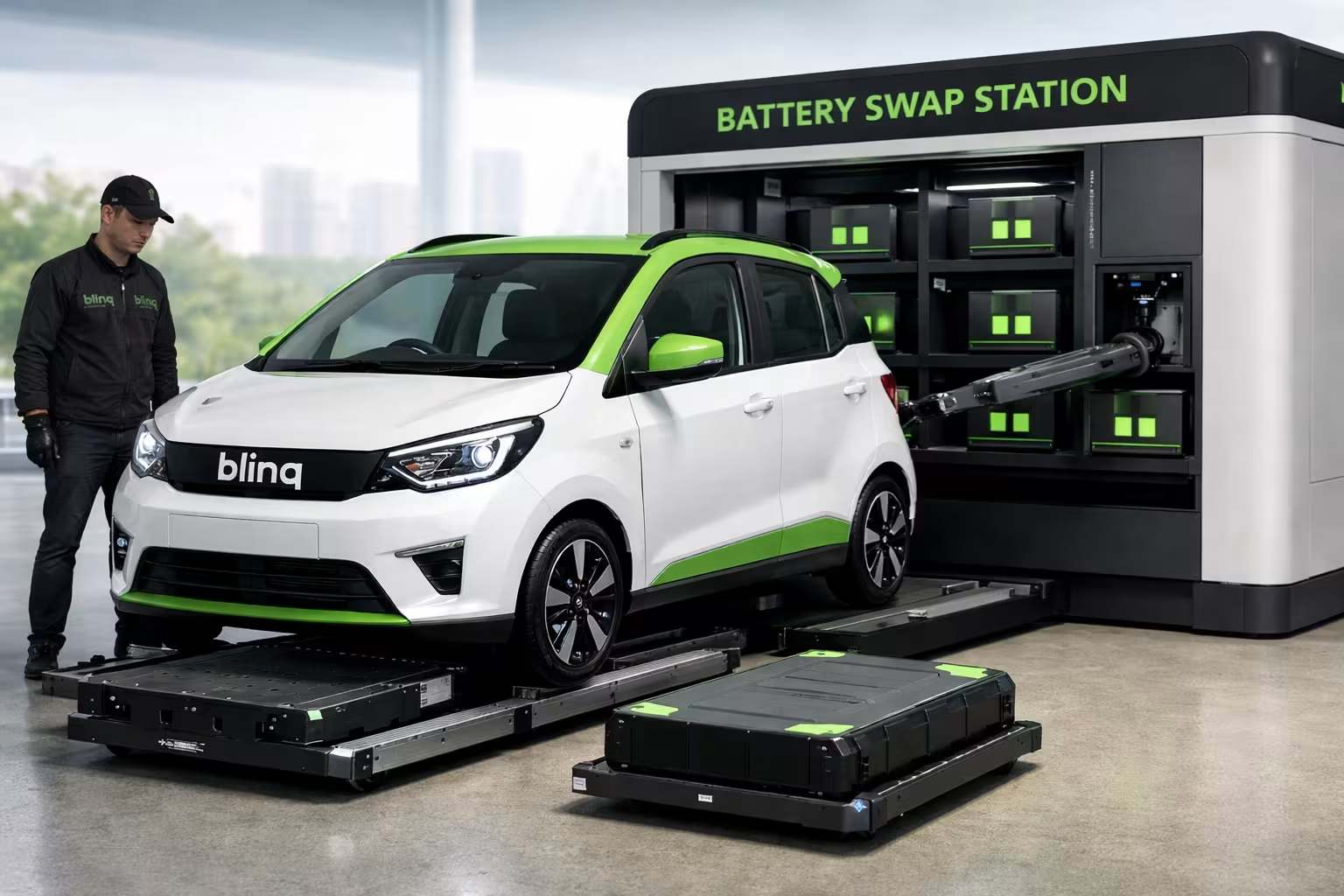
Instead of plugging in a car and waiting hours while it charges, Blinq’s EVs are being designed so that the battery can be swapped with a fully charged one in just minutes. This means that using an EV now feels almost like refuelling a petrol or diesel car. For India, where time and cost efficiency are crucial, this concept could become a game-changer.
Founded in 2024 by a group of technical visionaries, which includes Indian Institute of Technology alumni, like Nikesh Bisht, Blinq is creating purpose-built electric vehicles that are designed from scratch for the urban environment. This is no ordinary EV manufacturer simply replacing petrol engines with battery packs. Blinq is addressing the pain of EV vehicle owners.
This start-up has secured pre-seed funding of ₹4.3 crore, backed by early-stage investors who see strong potential in its battery-swapping EV model. This investment will be used to speed up vehicle development, build working prototypes, and begin planning a scalable battery-swapping infrastructure across key urban markets in India.
The model of battery swapping is proving to be quite relevant in the Indian cities due to poor charging infrastructure accessibility in several parts. What’s more, traditional EV charging is often slow, which is not convenient for commercial and fleet operations. This Battery swapping method allows owners and operators to easily swap out a discharged battery and get back on the job.
In terms of safety, this EV may offer a strong crash-ready body structure, dual airbags, ABS with EBD for controlled braking, and stability systems like ESC or traction control for better grip on any type of road. Since battery swapping is its key highlight, Blinq is also expected to include a secure battery-locking mechanism to ensure safe and reliable swaps.
it has already gained early attention in India’s start-up and EV ecosystem. The company secured pre-seed funding, giving it the financial push needed to accelerate vehicle development, prototype testing, and battery-swapping ecosystem planning.
Blinq’s forthcoming electric vehicles will be powered with a modular, swappable battery pack for urban and commercial use. The official specs are not known yet; however, industry estimates say a pack between 15 and 25 kWh is likely and optimised for city cruising rather than long highway runs.
Conclusion:
Blinq is positioning itself as a smart and highly practical solution for India’s growing EV market by tackling one of the biggest challenges, that is long charging time. With its battery swapping approach, the start-up could make electric mobility as convenient as traditional refuelling, especially for city users, delivery fleets, and commercial operators. While official specifications are still awaited, Blinq’s focus on modular battery packs and fast turnaround energy solutions gives it strong potential to become a major disruptor in India’s urban EV ecosystem.