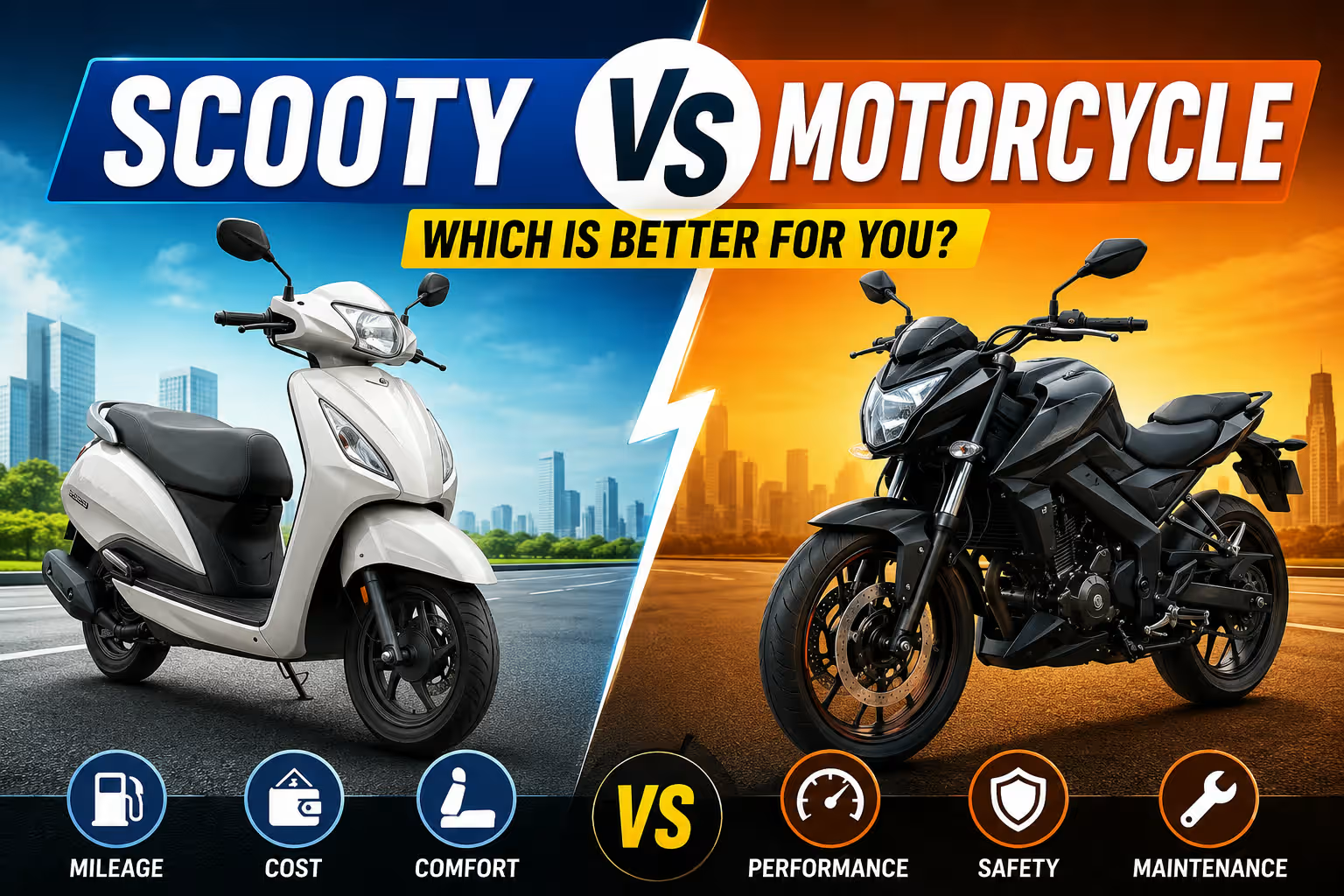
Many people may make the first major mobility choice when they purchase a bike. For students who need an inexpensive day-to-day mode of transport to school, commute employees riding through the busy urban traffic, or anyone but a family that is looking for convenience, the decision between scooty and motorcycle typically depends on which of these ones has to be chosen.
Both of them can provide cheap transportation and don’t have to use the public transportation that seems too crowded for the people’s lives, however they are helpful for different needs. Being aware of their strengths and weaknesses can help consumers make their decisions.
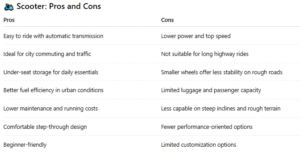
alat batata hai..grammarly aur quill bot Convenience is the primary factor of urban commuters, a place where a scooty gets better. With its automatic transmission, riders don’t have to worry about clutch operation or gear shifts. All one has to do is twist the throttle and continue to drive away. This simplicity is particularly attractive to novices, urban commuters and the user who often finds themselves in a situation where traffic stops for a considerable period. Unless you’re riding a scooty in busy traffic, it’s typically not as exhausting as riding a bicycle and you’ll have more time to think about traffic than other gears.
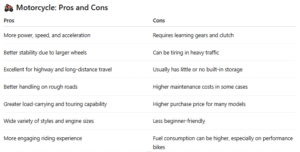
Motorcycles, on the contrary, ensure a greater immersive experience for motorcyclists. Handling power with the manual transmission makes motorcycles a fun experience for motorcycle enthusiasts and powered riders alike. Motorcycles typically feel more capable and responsive whether they are passing you on the highway, or going through a steep road. People who like a physical link of the bike with the road are inclined to choose motorbikes over automatic scooters.
Comfort is another important consideration. The Scooties are stepped into to make it easy for the rider to get on or off. The flat floor board is perfect for putting bags, groceries or other smaller items, making daily errands and tasks easier. Many scooters also feature under-seat storage, which means that you don’t need to carry extra luggage accessories. Unlike motorcycles, though, they are not as practical, which is replaced with larger seats and ergonomics when touring.
So with regard to fuel consumption, the difference between scooties and motorcycles is starting to become minimal. Both have a very nice combination of fuel economy, particularly in commuter class. Motorcycles do have an advantage on the longer rides and when riding on the highway, thanks to their efficient engines and gearing.
Motorcycles will usually excel in terms of performance. Entry level bikes typically have higher top speeds, better acceleration and better stability in comparison to scooters. They offer better weight distribution, better chassis and a bigger wheel, which ensure a greater confidence and comfort for their user at high speeds. On the other hand, Scooties are built to be used mainly in the city and could be less stable on rough roads or at higher speeds.
Road conditions also play a factor in the buying decision. If your locale is a city with good roads and lots of traffic, a scooty will offer you better convenience than a motorcycle. For those who regularly have to face rough terrain, village streets and extended motorway trips, motorcycles tend to perform better in terms of ride quality and durability. They offer more confidence on rough surfaces and absorb bumps better due to their larger size of wheels.
The maintenance and ownership expenses of both types of vehicles are relatively low. Scooties tend to be simpler in their operations and don’t require as much of a service as a motorcycle does, making them desirable for people looking for an easy to maintain ownership. Motorcycles will need a little more attention, especially when it comes to maintaining the chain and operating the clutch, but they tend to be tougher and can handle longer miles and more serious riding scenarios.
A second issue that needs to be taken into account is safety. The current generation of scooters and motorcycles have onboard technology including ABS, traction control and enhanced braking technologies. At higher speeds however motorcycles are generally stable and make better sense on the reasons of their wheel size, frame structure, and the way they operate. Therefore, there’s still a strong emphasis on smart driving practices and safety attire over the type of vehicle ridden on.
Practicality is important for family-oriented buyers, and the scooty may be the preferred option in this case. The flat floorboard and built-in shopping bags make carrying shopping bags, office backpacks and small parcels much easier. Convenience riders also favor scooters. Motorcycles, on the other hand, are for people that prefer a more stylish, performance-oriented and touring-focused motorcycle that exudes a more premium feel.
Whether it’s a scooty or a motorcycle that you’ll choose as your two wheeled vehicle will depend on your intended purpose. If you face short distances in the urban areas, lots of traffic and need ease in your daily commute, then a scooty might be the better option. A motorcycle will be better for anyone that loves to ride, spends a lot of time on the highways, or wants increased performance and stability.
The verdict on scooty versus motorcycle is so varied, and it lacks one universal winner. A scooty is highly practical, user-friendly and convenient to use, a motorcycle is much more comfortable and able to perform more tasks, and much more comfortable for longer distances too. When considering buying a bike, it’s essential for buyers to think about how they plan to ride, commute, the type of roads they ride on, cost, and whether they need the bike for a long-term or short-term purpose.


