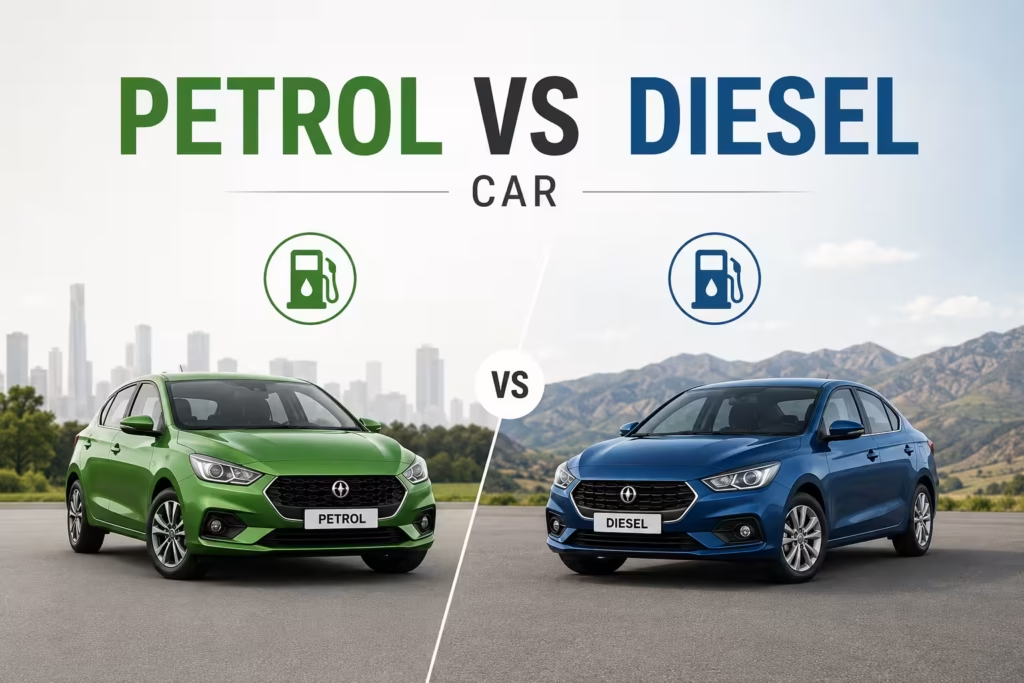
For decades, the petrol-versus-diesel debate has been one of the most important decisions facing car buyers. While the rise of electric vehicles and hybrids has changed the automotive landscape, petrol and diesel cars continue to dominate roads, especially in developing markets. However, choosing between the two is no longer as simple as comparing fuel prices. Factors such as running costs, performance, maintenance, regulations, resale value, and driving habits all play a crucial role in determining the better option.
For most buyers, the journey begins with the purchase price. Petrol cars are generally more affordable than their diesel counterparts. Diesel engines are more complex and require additional components, which increases manufacturing costs. As a result, diesel variants often command a significant premium over equivalent petrol models. Buyers with a limited budget may therefore find petrol cars more attractive from the outset.
When it comes to fuel efficiency, diesel cars traditionally hold the advantage. Diesel engines extract more energy from every litre of fuel, allowing them to travel longer distances while consuming less. For drivers who cover extensive highway miles or frequently undertake long-distance trips, the improved fuel economy can translate into substantial savings over time. Petrol cars, although less efficient in comparison, have become increasingly economical thanks to advancements in engine technology and lightweight construction.
Performance characteristics also differ considerably between the two fuel types. Petrol engines are known for their smoothness, refinement, and quick throttle response. They rev freely and deliver a more engaging driving experience, making them popular among enthusiasts and city commuters alike. Diesel engines, on the other hand, excel in torque delivery. Their strong low-end pulling power makes overtaking easier and helps the vehicle feel effortless while carrying passengers or luggage. This characteristic is especially beneficial for highway cruising and hilly terrain.
Driving conditions should heavily influence a buyer’s decision. If your daily commute consists primarily of city traffic with frequent stops and short trips, a petrol car is usually the better choice. Petrol engines warm up faster and perform efficiently in urban environments. Diesel cars are most effective when driven regularly over longer distances, where their fuel-efficiency advantage becomes more noticeable. Frequent short trips can sometimes lead to maintenance issues in modern diesel vehicles equipped with advanced emission-control systems.
Maintenance and ownership costs are another major consideration. Petrol cars generally have lower maintenance expenses due to their simpler engine design and fewer emission-control components. Repairs are often less expensive, and routine servicing tends to be straightforward. Diesel cars can be costlier to maintain because of components such as turbochargers, diesel particulate filters, and high-pressure fuel injection systems. While modern diesel engines are highly reliable, repair costs can be significantly higher if major issues arise.
Environmental concerns have also become increasingly important. Petrol engines typically produce lower levels of nitrogen oxides and particulate matter than diesel engines, making them cleaner in urban environments. Although modern diesel technology has reduced emissions considerably, stricter regulations worldwide have made diesel vehicles less attractive in some markets. Buyers should consider future regulations and policies that could affect diesel vehicle ownership in the coming years.
Resale value is another factor worth evaluating. Historically, diesel cars enjoyed strong resale demand due to their fuel efficiency. However, changing regulations and shifting consumer preferences have altered the market in many regions. Petrol vehicles now attract a broader range of buyers and often maintain competitive resale values, especially in urban areas where diesel demand has softened.
The financial break-even point remains a key aspect of the decision. Buyers who drive less than 15,000 to 20,000 kilometers annually may struggle to recover the higher purchase cost of a diesel vehicle through fuel savings alone. In such cases, a petrol car usually offers better overall value. Conversely, those who regularly cover long distances can benefit significantly from the lower running costs of a diesel vehicle over several years of ownership.
Ultimately, the choice between a petrol and diesel car depends on your usage pattern. A petrol car is ideal for city commuters, occasional travelers, first-time buyers, and those seeking lower maintenance costs and smoother driving characteristics. A diesel car makes more sense for high-mileage users, frequent highway travelers, and buyers who prioritize fuel economy and strong torque performance.
The petrol-versus-diesel debate does not have a single answer that fits everyone. Instead, buyers should carefully assess their annual mileage, driving conditions, ownership period, maintenance budget, and future regulations before making a decision. The smartest purchase is not the engine that promises the best specifications on paper. it is the one that aligns perfectly with your daily driving needs and long-term financial goals.
Before comparing petrol and diesel cars, it is important to understand how their engines work. A petrol engine operates using a spark-ignition system. It mixes air and petrol inside the engine cylinder, and a spark plug ignites this mixture to produce power. This process allows petrol engines to rev higher, respond quickly to throttle inputs, and deliver a smoother and quieter driving experience.
On the other hand, a diesel engine uses a compression-ignition system. Instead of spark plugs, air inside the cylinder is compressed to extremely high pressure and temperature. Diesel fuel is then injected into the hot compressed air, causing it to ignite automatically. This method generates more torque and extracts more energy from every drop of fuel, which is why diesel engines are typically more fuel-efficient and better suited for carrying heavy loads or covering long distances. While petrol engines focus on refinement and responsiveness, diesel engines prioritize efficiency, durability, and pulling power.


