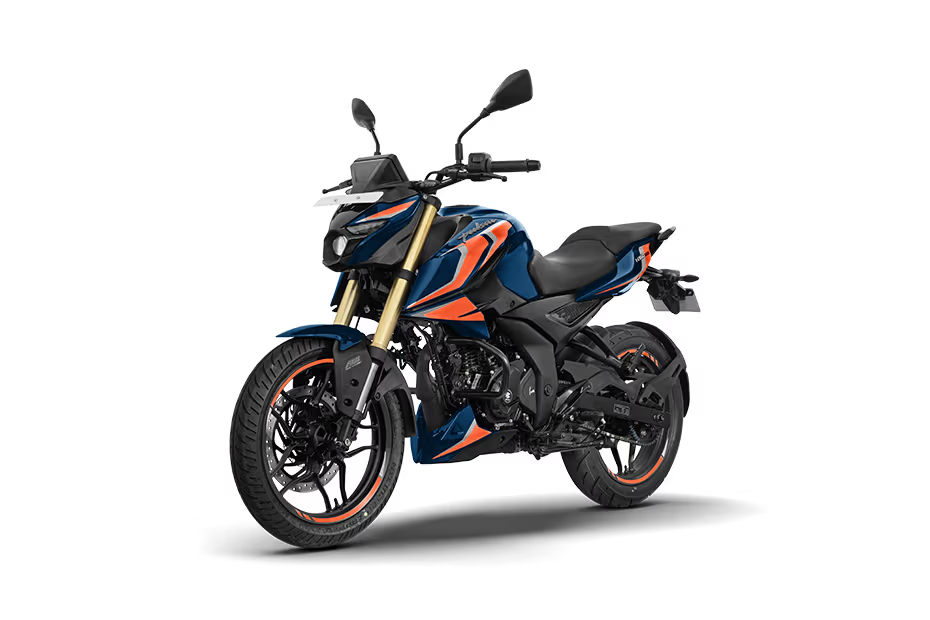
In line with the trend of its 25th anniversary in India, Bajaj Auto adds two variants to the Pulsar N160 range, kicking off with the Pulsar N160 S and N160 SS. The new versions rolled out on August 7, 2026, and introduced a significant mechanical and technology upgrade compared to some of the existing N160s. So, what has changed in these two new Pulsar N160 variants? Let’s have a quick overview of the key updates and new features.
Design & Exterior: Sportier Look, Upgraded Hardware
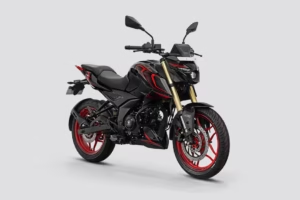
The new Bajaj Pulsar N160 S and N160 SS sport the aggressive streetfighter design that has become a defining characteristic of the Pulsar N160. The motorcycle gets a 14-liter muscular fuel tank, sharp body panels, a compact rear section, and a sporty overall stance. The most significant mechanical change is the replacement of the 33mm USD forks with 37mm.
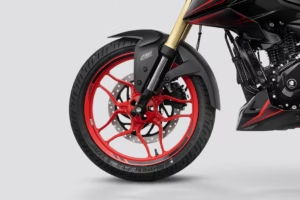
The braking system has also been improved with 300 mm of front disc. The bike is equipped with 17″ alloy wheels and a 100-section tire on the front and a 130-section tire on the back. Both variants come in favorite colors as Atlantic Blue and Pearl Metallic White and Brooklyn Black. The Brooklyn Black version receives contrasting red alloy wheels to help give it more sport-oriented styling.
Pulsar N160 S And N160 SS Features and Technology
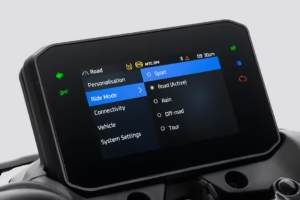
Both the new Pulsar N160 S and N160 SS models are upgraded with technology in comparison to the earlier versions. The N160 S is featured by an LCD instrument console with connectivity features, while the range-topping N160 SS is featured by a more premium 5-inch TFT display.
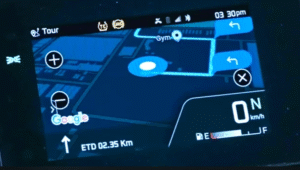
The N160 SS, with its TFT display, offers smartphone connectivity and Google Maps mirroring options, ensuring better navigability for daily users. Additional features such as Bluetooth, Wi-Fi connectivity, and notifications for calls and SMS are also included. On the N160 SS, adjustable levers are another luxury feature that can be found.
One of the most significant features of the new N160 S series is the use of an electronic throttle system. With this technology Bajaj can provide support of various riding modes to give extra control to the riders to control the response of the motorcycle majorly in various riding situations.
Pulsar N160 S And N160 SS Engine and Performance
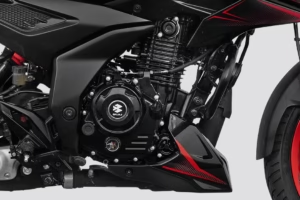
The largest mechanical change is a new 164.5cc, oil-cooled 4-valve engine. It can generate about 18.5 PS at a maximum engine speed of 9,500 rpm and 14.4 Nm at 8,000 rpm. This is teamed up with a 5-speed gearbox. Further, Bajaj claims that the motorcycle can accelerate from 0 to 60 km/h in around 4.5 seconds. This makes the new N160 impressive in its 160 cc motorcycle range and helps it to outperform some of its closest-range rivals.
This new electronic throttle also allows for four riding modes. Riders have options to choose their riding modes, depending on road conditions and riding requirements. The Rain mode is aimed at a more subdued reaction if you are riding in slippery conditions, and Road mode is for normal riding. Sport mode heightens sensor response for more exhilarating riders, and off-road mode enhances response when riding over uneven or loose pavement.
Apart from the above, N160S and N160SS are featured by Bajaj’s Crawl Technology, which is engineered to make slow-speed riding on the bike easier, with the aim of having less frequent clutch usage. This feature may be beneficial in the heavy traffic and stop-and-go riding conditions.
Safety Features: How Safe Is the New N160?
The new Pulsar N160 S and N160 SS also come with a few other upgrades, such as safety, which is another important feature. Single-channel ABS fitted on the N160 S makes it less safe than the top-spec N160 SS, which features two-channel ABS and traction control.
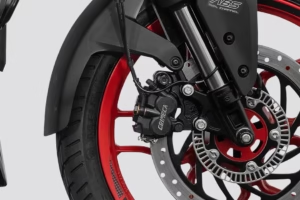
The motorcycle’s hardware package has been enhanced with a 300mm front disc brake and new 37mm USD front forks. The ABS, improved brake technology, and enhanced traction control, such as those found in the N160 SS, give added peace of mind, particularly when riding on highway surfaces or when the conditions change on the road.
Pulsar N160 S And N160 SS price in India
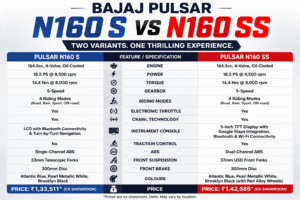
The new Bajaj Pulsar N160 S is priced at ₹133,511 ex-showroom, while the higher-spec Pulsar N160 SS costs ₹142,585 ex-showroom. The N160 SS comes with a variety of new technology and safety features, which is why it has a higher price. If you’re looking for a more lavish experience and are hoping to ride the motorcycle longer distances, the SS variant is more fully equipped.
Bajaj Pulsar N160 S V/S N160 SS
There are no big differences between the Pulsar N160 S and N160 SS, just equipment levels. A 5-speed gearbox, four riding modes, and electronic throttle and crawl technology are shared with both motorcycles as they share the 164.5 cc 4-valve engine, which delivers about 18.5 PS and 14.4 Nm of torque.
Assessing the Bajaj Pulsar N160 vs Rivals.
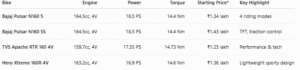
The all-new Bajaj Pulsar N160 joins a fiercely competitive 160cc motorcycle segment, which also includes the TVS Apache RTR 160 4V and Hero Xtreme 160R 4V.
For whom is the new Pulsar N160 best suited?
This new Pulsar N160 S is a good choice for anyone seeking a sporty 160cc motorcycle that isn’t too pricey and offers great performance and modern amenities. It looks to give the new 4-valve engine and riding modes without the exorbitant cost.
If you are looking for something like the full package, the N160 SS is better. It’s more appealing to those with a habit of longer-distance riding or riders preferring a more upscale experience with its TFT display as well as a Google Maps integration, traction control, and dual-channel ABS.
Autovenger’s Final Word:
The new Bajaj Pulsar N160 series is equipped with this load of new features, such as a 4-valve engine, electronic throttle, four riding modes, and Crawl Technology. This takes the N160 SS one step further, with 18.5 PS, traction control, dual-channel ABS, and a 5-inch TFT display and Google Maps.
The N160 S is more suited to those seeking value for money, whereas the N160 SS will appeal more to buyers interested in paying for extra features and safety. However, the real-world mileage is still to be determined, so mileage customers should hold off for road test data. Overall, the new N160 range is good, particularly for those who are looking for performance, technology, and functionality on a day-to-day basis.


