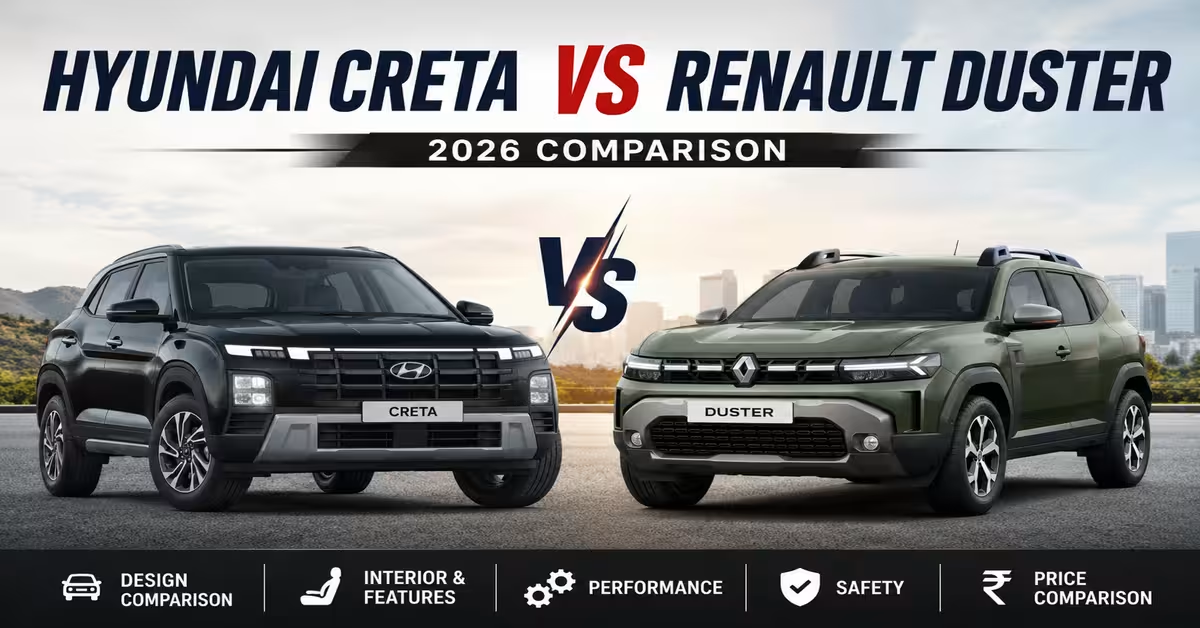
The Indian mid-size SUV segment is about to get a little warmer with the return of the Renault Duster. Hyundai’s premium mechanics give it the edge over the Hyundai Creta in space and sales, but the new Duster has rugged styling, increased dimensions, and typical SUV appeal. This is a comprehensive comparison for you on styling, features, engine options, mileage, and price.
Exterior Design Comparison:
Front Design Comparison:
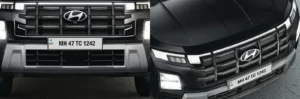
Hyundai’s front design is futuristic, with a full-width LED DRL strip, a parametric grille, a vertically split headlamp setup, and a host of chrome detailing. The SUV features a smooth bonnet, an urban frosty bumper, and a connected lighting treatment that lends the overall appeal of a tech SUV.
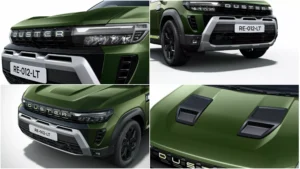
On the other hand, the Renault Duster takes a much more aggressive and rugged approach to design with its upright hood, wide grille, Y-shaped LED DRLs, pronounced cladding, and big skid plates. The Renault Duster, designed for rugged terrain, appears to be a more capable rough-road SUV, featuring boxier proportions and a more robust bumper style.
Side Profile Comparison:
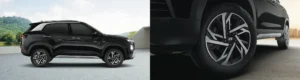
The Hyundai Creta adopts a contemporary and luxurious side profile, featuring flowing body lines, a roofline with an inclination, chrome window garnish, and a set of diamond-cut alloy wheels. At best, the Creta offers uniquely styled 17-inch alloy wheels that are appropriately wrapped in 215/60 R17 tires, adding to the crossover SUV character, in addition to improved on-road grip.
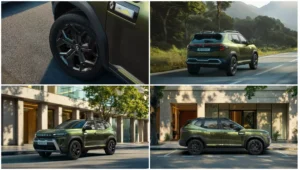
The Renault Duster has a more conventional SUV look with its squared wheel arches, copious black body cladding, upright windows, and functional roof rails. The new Duster is powered by larger 18-inch alloy wheels with 215/60 R18 tires, giving it a more substantial and muscular road presence.
Simply put, the Creta is sleeker, more aerodynamic, and more premium at the sides, while the Duster is a tall, rugged, and proper SUV character with larger wheels and a far stronger physical stance.
Rear Design Comparison:
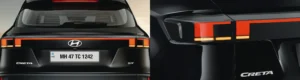
The Hyundai Creta features a premium-looking rear design with connected LED taillamps, a clean bumper layout, and smooth curved styling. This results in much of the area being in the same exterior color as well as providing it with a tailgate treatment that seems similar to a modern crossover; the Wildcat is most likely urban and refined.
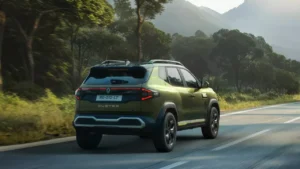
On the other hand, the rear of the Renault Duster has a more conventional, SUV-themed profile. It features a more rugged, practical design intended for adventure-focused buyers with its vertical tailgate, chunky bumper, and prominent skid plate, while the C/Y-shaped LED taillamps also add a bit of fresh character.
Size & Road Presence Comparison
In terms of Hyundai Creta dimensions, it features 4330 mm of length, 1790 mm of width, and 1635 mm of height with a wheelbase of 2610 mm and a ground clearance of 190 mm. The well-proportioned body looks more urban-sophisticated and has more road presence than a fat, boaty SUV through its dimensions.
The Renault Duster has dimensions of 4346 mm in length, 1815 mm in width, and 1703 mm in height, making it slightly larger than the Hyundai Creta. It also receives a longer wheelbase of 2657 mm and higher ground clearance figures at 212 mm. Such dimensions lend the Duster an even beefier stance on-road, at once taller, wider, more upright, and more SUV-like.
Overall, the Creta is not primarily focused on sporty premium looks; instead, it features a softer, more classy character, whereas the Duster presents a stronger SUV image with its rugged proportions and kerbside presence.
Interior Design Comparison:
Hyundai Creta Interior:
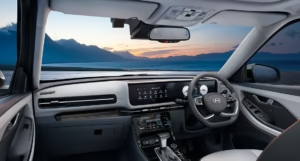
The cabin has been designed to provide a more premium tech-rich feel in the case of the Hyundai Creta. The infotainment system and digital instrument cluster each have two 10.25-inch displays, creating a performance car cockpit. The plush dashboard features material straddling the soft-touch variety along with ambient lighting and leatherette accents, giving it a high-end look and feel.
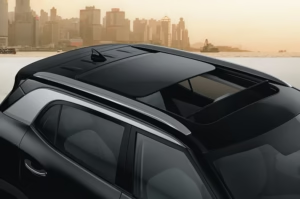
A panoramic sunroof, ventilated seats, a Bose sound system, dual-zone climate control, wireless charging, C-type usb port, powered front seats, and the 60:40 foldable seat at rear features found in the last-gen Creta, including reclining seats and Boss Mode, are also available with the Creta.

In contrast, the Renault Duster adopts a more rugged and functional style for its cabin. It has a touchscreen infotainment system measuring 10.1 inches and a digital driver display measuring 10.25 inches, laid out in a dual-screen configuration.
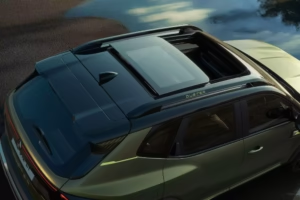
Other features include a panoramic sunroof, ventilated seats, dual-zone climate control, wireless charging, powered seats, ambient lighting, and connected car tech. Its interiors fall to a more adventure-oriented and functional theme than the more upscale-looking Creta cabin.
Final Verdict regarding the interior:
In contrast, the Hyundai Creta provides a level of luxury that is closer to premium, along with more advanced technology, enhancing the overall sophistication and comfort of its cabin. In the meantime, you obtain a more rugged, roomier, and functional cabin that fits the strong SUV nature of the Renault Duster.
Engine & Performance Comparison:
Creta Engine Option:
Hyundai Creta provides a variety of engines designed for refinement, city comfort, and balanced performance. It gets a 1.5-liter naturally aspirated petrol unit producing 115 PS power and 144 Nm torque, perfect for cruising through city traffic and doing excellent numbers on the fuel economy front. Transmission options are manual and IVT automatic.
The Creta also introduced a new 1.5-liter turbo-petrol engine that can make closer to 160 PS and 253 Nm of torque for buyers who want stronger performance. This engine is mated to a 7-speed DCT gearbox and provides strong acceleration, smooth highway cruising, and fun driving characteristics.
Apart from this, Hyundai continues to offer the 1.5-liter diesel engine with 116 PS and 250 Nm torque, making the Creta one of the last few SUVs in the segment to still offer a diesel option.
Renault Duster Engine Option:
On the other hand, the Renault Duster is more hardcore and performance-based. It uses a 1.0-liter turbo-petrol engine churning out 100 PS power and 160 Nm torque with a 6-speed manual gearbox.
Apart from this, a 1.3-liter turbo-petrol unit is also integrated with the Duster that produces 163 PS of power and 280 Nm of torque, mated with both 6-speed manual and 6-speed DCT (Dual-Clutch) automatic transmissions.
For improved fuel efficiency, the Duster is featured by a 1.8-liter strong hybrid system, two electric motors, and a 1.4 kWh battery pack, mated to an 8-speed automatic transmission.
In general, the Hyundai Creta is more about refinement and smooth city driving with multiple engine options (diesel included), whereas the Renault Duster is more rugged and performance-oriented with more turbo-petrol torque at the same price bracket and an SUV feel.
Safety Comparison, Very Crusial For Every Family:
Creta Safety Features:
Hyundai has focused on passive and active safety technology along with all modern features that are essential for every customer. It features 6 airbags, ESC, VSM, hill start assist, ABS with EBD, rear parking sensors, and a 360-degree camera.
Apart from these features, the Creta is loaded with Level-2 ADAS features such as Forward Collision Warning, Lane Keep Assist, Adaptive Cruise Control, Blind Spot Monitoring, and Rear Cross Traffic Alert and is one of the most loaded SUVs in its segment.
Duster Safety Kit:
The safety regime on the Renault Duster is more in favor of ruggedness and SUV appeal. It should get 6 airbags, ESC, traction control, hill descent control, ABS with EBD, a tire pressure monitoring system, and advanced braking assistance.
The new-generation Duster will likely include ADAS technology such as automatic emergency braking, lane departure warning, and traffic sign recognition, especially in higher variants.
But the biggest plus with the Duster has been its much-improved SUV-friendly mechanical platform with higher ground clearance that is able to tackle rough roads and uneven terrain with aplomb.
Final Verdict Regarding Safety Concern:
The Hyundai Creta offers a much more technology-focused active safety package, including superior ADAS safety features and urban driving assistance systems. On the other hand, the Renault Duster pays attention to high integrity, SUV handling, and the safety you want when driving rough roads. For one, the Creta will likely be the preferred choice for buyers who are seeking premium safety technology, whereas the Duster is more likely to provide buyers with more confidence in SUV toughness and durability.
Mileage Comparison Of Hyundai Creta & Renault Duster:
Hyundai Creta: Multiple engines with excellent fuel economy
One of the critical aspects of this vehicle is the SUV segment-leading fuel efficiency of 19.1 km/L from its 1.5-liter diesel engine. The 1.5-liter turbo-petrol variant offers a fuel economy of around 18.2 kmpl, and the naturally aspirated petrol variants offer fuel efficiency of around 15 to 17 kmpl, depending on the transmission choice.
Renault Duster Fuel Efficiency:
On the other hand, the Duster is also powered by multiple engine options, in which the 1.0-liter turbo petrol (TCe 100) delivers an ARAI-certified mileage of approximately 18 km/l, and the new 1.3-liter turbo TCe 160 engine, paired with the DCT automatic gearbox, comes with an ARAI-certified mileage of 18.45 km/l, whereas the manual version returns about 17.75 km/l.
Hyundai Creta Pros & Cons:
The Hyundai Creta is the most premium car out of the three with its great cabin, futuristic design, solid engines, and feature-loaded interior. Ideal for both city trips and long highway journeys, Hyundai’s large dealership network and impressive resale value make it the perfect family SUV.
However, the Creta prioritizes comfort as an urban car rather than focusing on off-roading capabilities like a traditional SUV. The SUV’s design is less muscle-bound compared to other SUVs, and its full-length bodywork gives it a lower profile along with softer styling that takes away from the rugged off-road image.
Renault Duster Pros & Cons
The Duster has excellent SUV styling, high ground clearance, big boot space, and road presence. Its SUV-like credentials, upright stance, and practical cabin make it more suitable for rough roads and for buyers seeking genuine SUV styling.
On the con’s side, the Duster is probably not going to be quite as lush inside as the Creta and won’t match it for premium features or overall refinement, either. In several cities of India, Renault’s after-sales and resale value are also likely to be weaker than those of Hyundai.
Price Comparison Of Hyundai Creta & Renault Duster:
The Hyundai Creta is priced at approximately ₹10.79 – ₹20.20 lakh (ex-showroom), while the Renault Duster is priced slightly lower at around ₹10.29 – ₹18.49 lakh. The Duster was always priced more aggressively; the Creta, however, was settled on at a higher price point on the basis of a more premium interior, more sophisticated engines, and other comfort features.
Quick Comparission Of Both Cars:
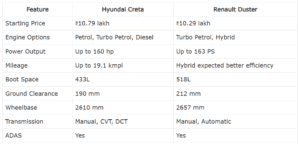
Hyundai Creta vs. Renault Duster: Buyer’s Comparison
Go for the Creta if your priority is premium comfort, great technology, easy city driving, and peace of mind in long-term ownership. The Creta comes with better fit and finish, features, extended service reach, and higher resale value, making it the best bet for urban families and daily commuters.
Choose the Renault Duster if you like rugged SUV styling, higher ground clearance, larger boot space, and better road presence. The Duster is a better fit for buyers who drive over rough roads more frequently or prefer a more traditional SUV character instead of a crossover-like feel.


