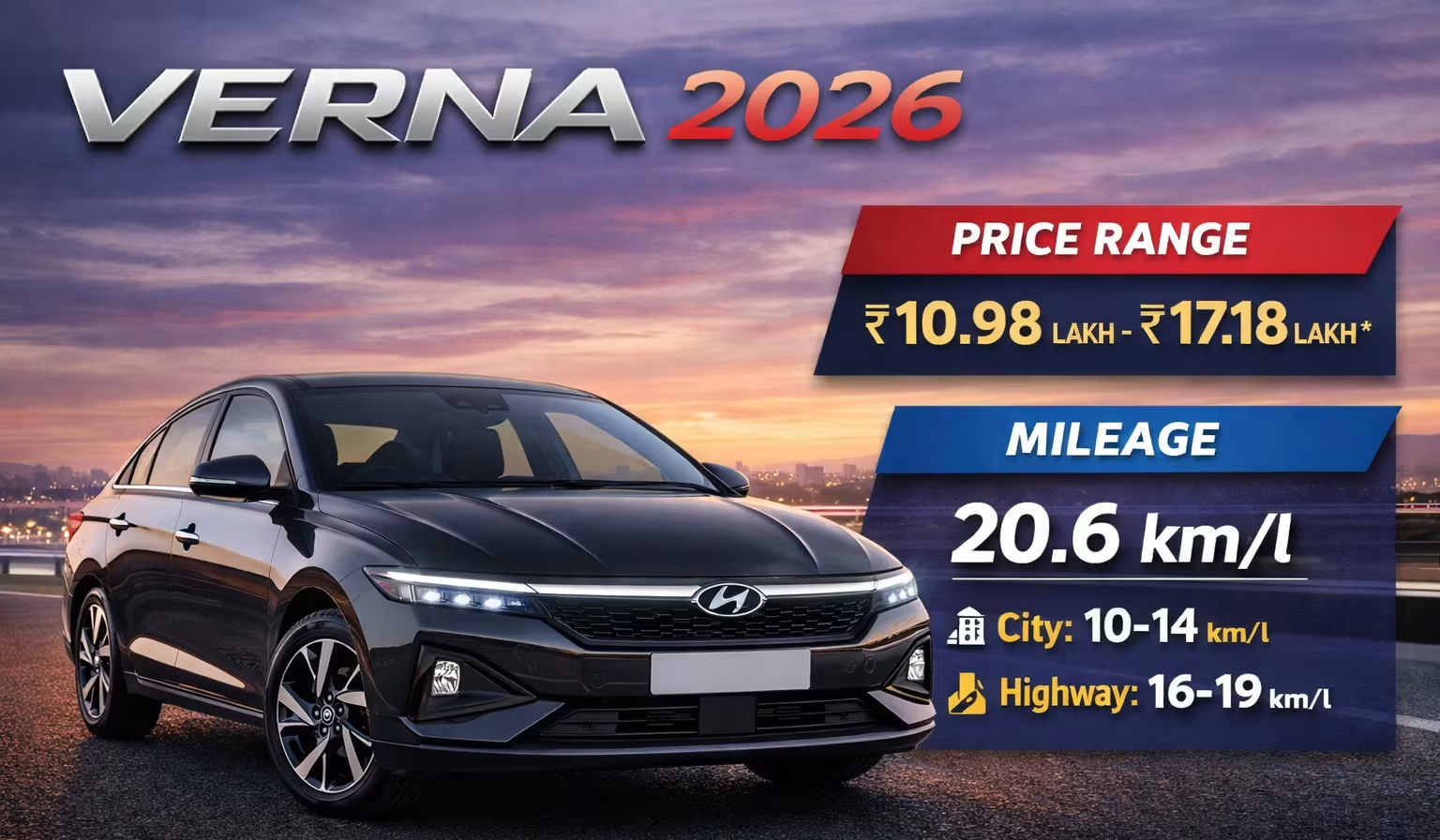
The Hyundai Verna has been one of the most loved sedans in India and is known for its futuristic design, punchy engine options and feature-loaded cabin. With the Verna 2026 facelift, Hyundai has made very mild design modifications, added tech features and improved safety equipment to keep the sedan relevant in the segment. We have covered all the updated details of the Verna 2026 facelift in this article.
Exterior Design Updates:
On the outside, the Hyundai Verna facelifted 2026 model gets mild design updates that give it a more sporty and premium look than before without abandoning its futuristic styling language. Hyundai has not gone for an entirely new design; instead, it has updated several key elements, including the grille, bumper, lighting setup and alloy wheels, to give the car a more contemporary feel.
At the front, the 2026 Verna retains its signature full-width LED DRL light bar that runs across the whole width of the car. This lighting feature brands the sedan by giving it a distinctive identity and an instantly recognisable profile on the road. The facelift also introduces new LED projector headlamps that are lower in the bumper, making for a sharper and more sophisticated look from the front. It also gets a revised front grille set in darker chrome, and new bumpers featuring sharper detailing to create sportier looks.
The overall silhouette is little different from the side. This means the car retains its clean coupe-like roofline and sculpted body lines that help give the sedan a sporty and aerodynamically efficient stance. New diamond-cut alloy wheels add a dash of premiumness to the car while also making it look even sportier. The side profile is further enhanced by chrome detailing around the windows and body-coloured ORVMs with integrated turn indicators.
Moving to the rear, the Verna carries forward its connected LED tail lamps, which span across the width of the boot and continue to be one of the most unique design elements on this sedan. At the rear, it’s also getting a similar updated bumper with diffusers and silver accents that contribute to its aggressive and contemporary appearance. A discreet spoiler is integrated into the boot lid, which adds to the sporty demeanour of this car.
Overall, the exterior of the 2026 Hyundai Verna facelift is more about refinement and premium detailing than major changes. Thanks to these updates, including a now-stylish grille, sharper bumper design, refreshed alloy wheels and modern lighting elements, the sedan continues to wear an undeniably sophisticated and contemporary suit that serves it well in this segment.
Interior & Comforts:
The cabin of the Hyundai Verna facelifted 2026 version continues to utilise the current Hyundai design language heavily centred around technology, comfort, and quality materials. Hyundai has upgraded the cabin with more sophisticated and high-tech features so it is among the most feature-laden sedans in its mid-size segment. The look of the dashboard itself is still clean and futuristic, in a design that firmly integrates the driver into Audi’s cockpit, putting most vital controls easily within reach.
The dashboard is sleek and futuristic, featuring two 10.25-inch display screens that integrate the infotainment system with a digital instrument cluster. The unit is also equipped with wireless support for Android Auto and Apple CarPlay, as well as a premium 8-speaker Bose sound system for a theatre-like experience inside the cabin.
Feature-wise, the Verna features ventilated front seats, a powered driver seat, ambient lighting, a wireless phone charger and a large electric sunroof. It features higher-quality materials and top-shelf upholstery for a more premium feel in the cabin.
Other convenience features include automatic climate control, push-button start, smart key access and rear AC vents for both the front passenger and rear seat passengers. In sum, the Verna facelift offers one of the most feature-rich interiors in its segment.
Key Safety Features:
Multiple active and passive safety technologies have been put together into the Verna facelift’s strong safety package with a clear focus on boosting driver confidence while providing passenger protection. The sedan features a total of seven airbags as standard, which provides enhanced safety to passengers in the event of a collision, including front, side and curtain-type airbags.
The car is also equipped with must-have safety systems, including an Anti-lock Braking System (ABS) along with Electronic Brakeforce Distribution (EBD), Electronic Stability Control (ESC) and Vehicle Stability Management (VSM). These systems aid stability and control in the event of sudden braking or tricky road conditions.
The ADAS (Advanced Driver Assistance System) level 2 pack is another big highlight of the Verna. These technologies use cameras and sensors to assist the driver and help prevent accidents. Significant ADAS features consist of the same forward collision warning, lane-keeping assist, lane departure warning, adaptive cruise control, and rear cross-traffic alert.
Along with standard safety features, you also get front and rear parking sensors, a rear-view camera, and TPMS as standard, along with hill-start assist, ISOFIX child-seat mounts and seat-belt reminders for all occupants in the car. These technologies enhance convenience and safety when driving on the road.
These advanced safety technologies, along with structural improvements, have also ensured that the Verna also boasts a 5-star Global NCAP safety rating, making it one of the safest sedans in the Indian mid-size segment.
Powertrains & Performance:
The facelifted Hyundai Verna doesn’t change its engine option and continues to feature two petrol engine options that offer a good mix between performance and efficiency. Multiple transmission options are offered to suit a range between comfort and performance for buyers.
The first one is a 1.5-litre naturally aspirated MPi petrol engine that makes 115 PS of power and generates roughly 144 Nm of torque. This powertrain is suited to smooth daily driving and decent fuel economy. It comes optionally as either a 6-speed manual transmission or a CVT automatic gearbox so it can tackle city commuting as well as relaxed highway cruising.
The second powertrain is a more powerful 1.5-litre Turbo GDi petrol engine, which produces a massive 160 PS and 253 Nm of torque, which makes the Verna one of the most potent sedans in its segment. The engine is available with either a 6-speed manual or a 7-speed dual-clutch automatic (DCT) for faster acceleration and a more engaging driving experience.
Hyundai Verna 2026 Facelift Mileage:
The Hyundai Verna facelift returns great fuel efficiency for a mid-size sedan. The 1.5-litre naturally aspirated petrol motor has a rated mileage of around 18.6 km/l with the manual transmission and about 19.6 km/l with the CVT automatic as per ARAI tests.
Even the more potent 1.5-litre turbo petrol is fairly fuel efficient, returning around 20 km/l with the manual gearbox and as great as 20.6 km/l with the 7-speed DCT automatic. Under real-world conditions, the Verna usually returns fuel economy figures of 10–14 km/l in city use and 16–19 km/l on highways, depending on how you drive as well as road conditions.
Overall, the Verna facelift strikes a good mix between strong performance and decent fuel economy for something that you can use as both your daily commuter and a highway tripper.
Hyundai Verna 2026 Facelift Price:
Hyundai Verna facelift: Price in India (ex-showroom) The Hyundai Verna facelift is priced from around ₹10.98 lakh (ex-showroom) for the entry-level variant. Depending on the variant and transmission option, that figure hits around ₹17–18 lakh (ex-showroom) for the top-end turbo automatic model.
The variants also include EX, S, SX, and SX(O), giving buyers options depending on features and budget. In major cities, this translates to an on-road price of ₹12.5 lakh at the lower end and around ₹19–20 lakh after taxes, insurance, and registration charges have been added.
Autovenger’s View:
In conclusion, the Verna is still one of the competitively priced mid-size sedans around that gives you premium features, a powerful performance and top-notch safety tech at a price point that fights against rivals such as the Honda City, the Volkswagen Virtus and the Skoda Slavia.