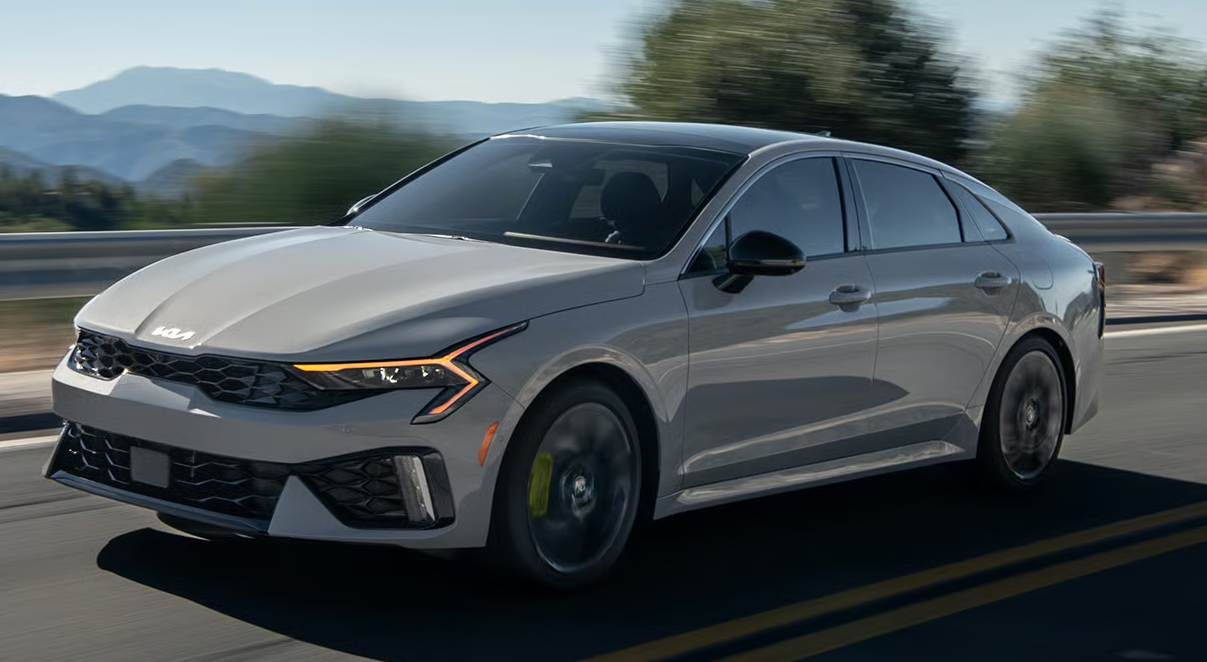
Two sedans with completely different personalities. The Kia K4 brings futuristic styling, fuel efficiency, and modern tech for everyday driving, while the Kia K5 delivers a more premium experience with stronger performance, larger dimensions, and executive-level comfort. From design and interiors to engine performance and safety, this comparison reveals which Kia sedan truly fits your lifestyle and budget in 2026.
Exterior Design: What You’ll Notice First
Front Profile Comparision
The Kia K4’s front styling exudes a futuristic and aggressive appearance, mirroring the styling of contemporary electric cars. This sedan sports vertical LED DRLs (Daytime Running Lights), narrow headlights, a compact main grille, and a generous lower grille, lending a sporty road presence to the model.
The bold character of the sculpted bumper design and angular body lines is complemented by the low-lying stance for an enhanced athletic look. To make K4 look funky and chic in the compact sedan genre, Kia has also given it a gloss-black theme with aerodynamic styling cues.
Kia introduces the Kia K5 with a noticeably sleeker and more high-tech appearance to the front of the vehicle and a wider stance along with some sporty styling details. It gets Kia’s trademark Tiger Nose grille, precise LED headlamps, trendy DRLs, and an aggressively contoured front bumper, which adds to its sportiness appeal.
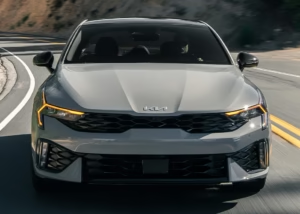
Lower bumper, longer hood, and chrome-black exterior accents add a luxury feel to the K5. Some sporty touches such as extra devices and an enlarged air intake further enhance the sedan’s road presence in GT-Line trims.
Side Profile Comparision:
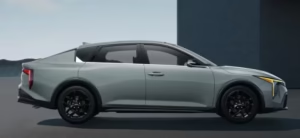
The Kia K4 has a sport-oriented fastback design that takes the roofline design aspect from a coupe with hidden rear door handles and sharp design lines, which gives the car a futuristic look.
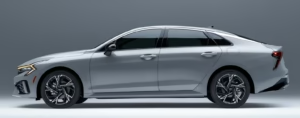
A long wheelbase, flowing roofline, and muscular shoulder lines give the Kia K5 a sleek and premium side profile that adds to its executive sedan styling. The K5’s overall sporty stance is characterized by bigger alloy wheels, chrome window trim, and a lower ride height, which provides it with a more athletic, yet sophisticated, road demeanor.
Rear Profile Comparision:
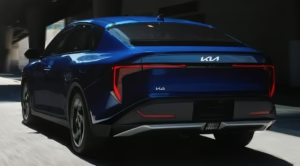
The back styling of the Kia K4 is sleek and sporty with connected-style LED rear lights, a sculpted trunk lid, and an aggressive bumper look. The sedan’s lower compartment, which takes its styling cues from a diffuser, and angular trim lines accentuate the modern and youthful look of the vehicle.
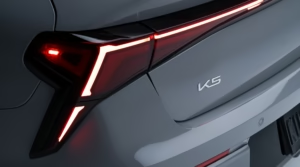
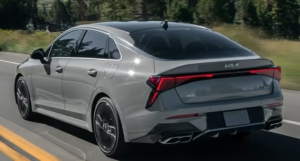
While the Kia K5’s rear profile gets a premium and sporty look with full-width LED tail lamps, the muscular-looking bumper and sleek fastback-inspired styling complete the sporty exterior. The wide stance, chrome trim, and sporty exhaust note give the K5 a clean yet sporty highwayside appeal.
Tyre Profile And Alloy Wheel Design:
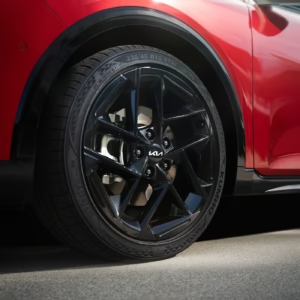
The Kia K4 is likely to be fitted with 16-inch alloy wheels across the lower end of the trims and much larger 17- or 18-inch sporty alloy wheels across the high trims. The tire’s design provides a balance between comfort, fuel efficiency, and performance, making the sedan a practical and sporty choice for driving in urban areas.
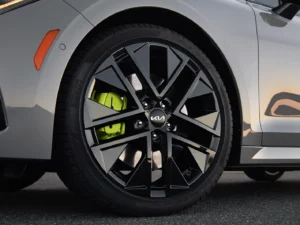
Larger 17-inch wheels are standard on the Kia K5 running in the GT-Line and GT trims, while other models come with a choice of 18-inch and 19-inch sporty alloy wheels. The broad tire design is ideal for the sedan’s emphasis on an athletic design and reinforces its prowling motion on the highway, sports-like agility, and luxurious on-road posture.
Dimensions Comparision
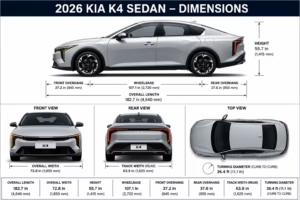
The Kia K4 is an affordable coupe with a sporty fastback body style. Its full size is around 4,640 mm long, 1,850 mm wide, and 1,415 mm high, providing it with a compact and athletic look. The sedan is equipped with a wheel base of approximately 2,720 mm, which allows good cabin space and stability. On ground clearance, it would probably be approximately 140 to 150 mm, which is fine for normal city driving or highway use.
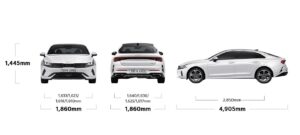
On the other hand, the Kia K5 features a sleek midsize sports sedan design. The approximate size is 4,905 mm in length, 1,860 mm in width, and 1,445 mm in height, resulting in more road face classification than the K4. The sedan features a longer wheelbase, measuring 2,850 mm, and offers better comfort in the rear seat and is more stable on the highway. Its ground clearance is likely to be around 145 mm, offering as much sporty ground clearance as for everyday use.
Kia K4 v/s K5 Suspension Setup:
For better comfort and cost, the Kia K4 offers a MacPherson strut front suspension package, whereas in the rear, it offers a twin torsion beam suspension, which is the standard arrangement on most of the cars. For higher trims, there might be a more polished rear suspension tuning and enhanced ride quality and handling. The setup is geared more toward a smooth, urban driving experience, comfort, and fuel-smart daily driving.
Whereas the Kia K5 receives a suspension package that is higher on performance tuning with MacPherson strut suspension at the front and multi-link suspension on the rear for better stability and ride comfort. This configuration offers improved highway manners, improved cornering agility, and a more polished driving experience, particularly at the GT-Line and GT levels.
Interior And Cabin Layout
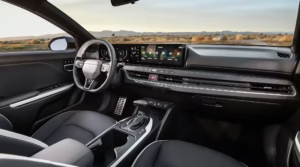
Inside, the Kia K4 has a modern and simple interior design, with an emphasis on technology and comfort. The design of the dashboard is clean and modern, and the ambient lighting, along with soft tactile materials, adds to the quality of the coupe-style interior.

In terms of tech, it features a large curved digital screen system with a 12.3-inch infotainment touchscreen and a 12.3-inch digital driver console. For a more advanced user experience, the system provides support for wireless Apple CarPlay, Android Auto, and connected car technology as well as voice controls.

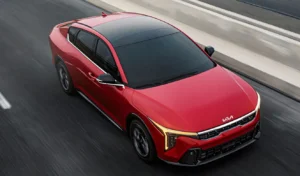
Additionally, the cabin features comfortable seating, more legroom for rear passengers, and a driver-focused cockpit. The interior becomes more modern with slim AC vents, ultra wide sunroof, 360° camera, Harman Kardon Premium Audio setup, multi-function steering controls, and modern center console styling, giving the interior a more futuristic look.
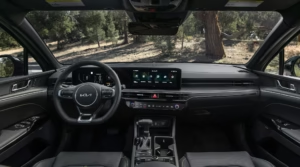
On the other hand, the Kia K5 features a more upscale interior and dashboard layout, sporty design touches, and luxurious materials, offering a more premium, spacious interior cabin. The interior of the cabin is actually broader and more luxurious, particularly in GT-Line versions adorned with contrast stitching and sporty elements.
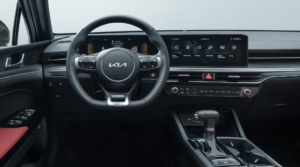
On the tech front, its cockpit is equipped with a 12.3-inch infotainment touchscreen interface and a 12.3-inch fully digital driver display. The infotainment features navigation, wireless smartphone connectivity, connected features, and advanced voice control.

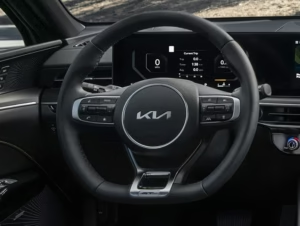
Additionally, the K5 also offers an improved level of comfort for the rear seats, increased rear-seat legroom, and improved highway cruising comfort. Streeing mounted control, ambient lighting, high-end audio, ventilated seats, panaromic sunroof, and dual climate control help add to a high-end vibe.
Safety Features : Kia K4 v/s Kia K5
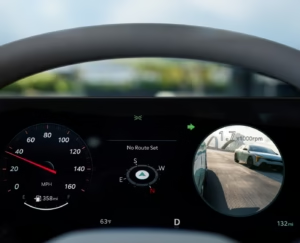
Both the Kia K4 and Kia K5 feature comprehensive, contemporary safety systems, such as multiple airbags, ABS with EBD, electronic stability control, adaptive cruise control, lane keeping assist, blind-spot monitoring, and advanced ADAS (advanced driving assistant systems) features.
Buyers of the Kia K4 will find more modern driver assistance features and urban safety characteristics, and the Kia K5 will offer more premium safety surroundings, with frontal passive braking and advanced highway driving assist systems, and have a better crash protection reputation, geared towards families and long-distance driving.
Kia K4 and K5 Performance & Engine Differences
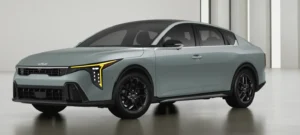
Two petrol engine options are offered in the Kia K4, depending on the model. Engine options for the standard models are a 2.0L naturally aspirated 4-cylinder petrol engine, which delivers 147 hp of power at 6,200 rpm and 179 Nm of torque at 4,500 rpm, mated to an Intelligent Variable Transmission (IVT/CVT) to improve smoothness and fuel economy in urban driving.
Whereas higher trims are equipped with a more potent 1.6-liter, turbocharged engine, producing around 190 hp of power at 6,000 rpm and 264 Nm of torque between 1,700 and 4,500 rpm, along with an 8-speed automatic. The K4 is driven by the aims of balanced performance, sophisticated everyday usage, and fuel efficiency.
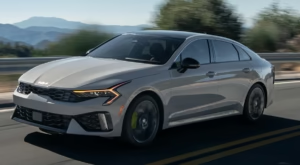
On the other hand, the Kia K5 is available in several different engine options, with a greater emphasis on performance and highway capabilities. The 2.5-liter naturally aspirated 4-cylinder petrol engine produces around 191 hp of power at 6,100 rpm and 245 Nm (181 lb.-ft) of torque at 4,000 rpm, with all of these being mated to an 8-speed automatic transmission.
Performance-oriented GT versions come with a turbocharged petrol engine offering 290 hp at 5,800 rpm and 422 Nm (311 lb.-ft) of torque from 1,650 to 4,000 rpm, engaging in an 8-speed dual-clutch automatic transmission (DCT). The K5 offers faster acceleration, better highway response, and a better ride than the smaller-based K4.
Fuel Efficiency : Kia K4 v/s Kia K5
Fuel efficiency is a Kia K4’s strong suit. The standard 2.0-liter petrol engine, coupled with an IVT/CVT transmission powertrain, is likely to be used for its high urban efficiency, with, say, an expected 30 mpg (Miles Per Gallon) / 13 km/l in city driving and up to 40 mpg (Miles Per Gallon) / 17 km/l on the highway for international markets.
Fuel economy is decent for a performance-oriented midsize sedan, the Kia K5. The naturally aspirated 2.5-liter engine will offer some 26 m/g (Miles Per Gallon) / 11 km/l in city driving and about 37 m/g (Miles Per Gallon) / 15 km/l in highway driving, and for the more powerful GT turbo, it will offer slightly lower figures on the back of the greater power output.
Pricing Details : Kia K4 v/s Kia K5
Because of its status as an affordable coupe style, the 2026 Kia K4 will be offered at the lower price range, starting at about $22,290 for the LX trim (base variant), all the way to approximately $28,390 for the GT-Line Turbo variants in the U.S. market.
The K4 is a great value packed with modern features, a sporty design, and safety tech for a relatively attainable price. If available in India, it can be offered in the country at around ₹25 lakh (ex-showroom) levels.
The 2026 Kia K5 is priced higher due to its larger size, more powerful engine options, and premium features. Starting at about $27,490 for the base variant and going up to $34,990 for higher trims in the U.S., the performance-focused GT variant is priced near $33,590 in the U.S. market.
The K5 slots in the midsize sedan market and delivers a higher level of refinement, performance, and comfort to its class. Based on its future release in India, the price of this model is expected to be somewhere between ₹21 lakh and ₹30 lakh (ex-showroom) depending on the variant and engine configuration.
A/V Editor’s Buying Advice:
The main differences between the Kia K4 and the Kia K5 depend on what it is you’re looking for, how you plan to use it, and your budget. Though there are many modern features and advanced safety options available in both these sedans, they do cater to different buyers.
If people are looking for an affordable and stylish car, the Kia K4 is the safer bet. Cars are more manageable in urban areas, have higher fuel efficiency, and boast future-focused amenities and infotainment systems for a reasonable price. The K4 might be more useful and affordable for young professionals, college students, and first-time car buyers.
The Kia K5 is perfect for those who are seeking a higher-quality sedan ride with more robust engine output, a long wheelbase, and a strong road presence. Its higher-performing turbocharged engine variants, suspension refinement, and higher-quality cabin make it a more family-friendly, long-haul traveler or sporty executive sedan.


