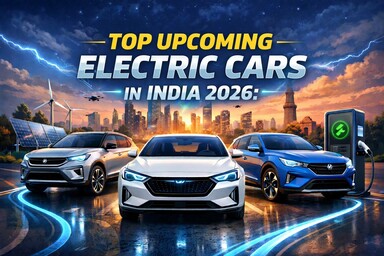
India’s electric vehicle market is gearing up for a massive transformation in 2026. From affordable micro-SUVs to premium European electric crossovers, automakers are preparing an exciting lineup for Indian buyers. Brands like Tata Motors, Mahindra, VinFast, Skoda Auto, Volkswagen, Kia and BYD are ready to introduce new-generation EVs with longer range, faster charging, and smarter technology.
Whether you’re looking for a family-friendly 7-seater, a stylish urban SUV, or a futuristic premium crossover, 2026 could be the biggest year yet for electric mobility in India.
Tata Sierra EV:
The Tata Sierra EV is the all-electric version of the iconic Sierra SUV, built on Tata’s advanced Acti.EV platform. It will feature battery options expected around 65 kWh and 75 kWh, with standard front-wheel drive and an optional dual-motor AWD setup delivering up to 504 Nm of torque. The claimed range is likely between 450–600 km (ARAI), with fast-charging support and premium features such as Level 2 ADAS, a panoramic sunroof, and connected car tech.
Positioned as a midsize electric SUV, it will rival the Mahindra BE 6, Hyundai Creta EV, and MG ZS EV, with an expected price of ₹15–25 lakh (ex-showroom). While the ICE Sierra launched on November 25, 2025, the Sierra EV is expected to arrive in 2026 and is yet to be officially launched as of February 2026.
Also Read:- Tata Starts Offering Discounts On Fresh 2026- Built Cars
VinFast Limo Green:
The VinFast Limo Green is an upcoming 7-seater electric MPV designed for Indian families and fleet buyers. With a practical 2+3+2 layout, 4.74 m length, and 2.84 m wheelbase, it promises a spacious cabin, modern LED styling, a 10.1-inch touchscreen, and multiple USB ports. As VinFast’s third India model after the VF6 and VF7, it aims to offer zero-emission practicality with local production plans in place.
Powered by a 60.13 kWh LFP battery, the front-wheel-drive setup produces 201 hp and 280 Nm of torque. It claims over 450 km (NEDC) range, with an expected 350–400 km in real-world Indian conditions. Charging options include 11 kW AC and up to 80 kW DC fast charging (10–70% in about 30 minutes).
Expected to launch in India in February 2026, the Limo Green is likely to be priced between ₹19–24 lakh (ex-showroom), positioning it as an affordable electric MPV rival to the Kia Carens Clavis EV and BYD eMax 7.
VinFast VF3:
The VinFast VF3 is set to energize India’s urban EV space as a fun, ultra-compact micro-SUV built for tight city streets. With its boxy, retro-inspired design, compact 3.2-meter length, and 191 mm ground clearance, it’s designed to handle potholes and traffic with ease. First showcased in India at Bharat Mobility 2025, it positions itself as a stylish and affordable alternative to the MG Comet EV, targeting first-time EV buyers and fleet operators.
It runs on an 18.64 kWh LFP battery paired with a rear-mounted motor, producing around 39–43 hp and 110 Nm of torque. The claimed range is over 210 km (NEDC), with an expected real-world range of about 180–200 km. DC fast charging can take the battery from 10–70% in roughly 36 minutes, making it practical for daily use.
Expected to launch in 2026, the VF3 could be priced between ₹7.5–10 lakh (ex-showroom). With features like a 10-inch touchscreen and smartphone connectivity, it aims to make electric mobility affordable, simple, and exciting for city buyers.
Mahindra XUV.e8:
The Mahindra XUV.e8 is set to energize India’s midsize SUV segment as the all-electric sibling of the popular XUV700. Built on Mahindra’s advanced INGLO platform, this born-electric 7-seater promises bold styling with a closed grille, sleek LED lighting, aerodynamic wheels, and a spacious, tech-loaded cabin. Expect a premium triple-screen dashboard, panoramic sunroof, Level 2 ADAS, 360-degree camera, and connected features designed for modern family buyers seeking comfort and cutting-edge tech.
Powering the XUV.e8 will be battery packs of up to 80 kWh (around 60–80 kWh options expected), delivering a claimed range of 450–550 km. Base variants are likely to offer rear-wheel drive with around 228–285 bhp, while higher trims may feature dual-motor AWD producing up to 394 bhp. Fast charging could enable 0–80% in roughly 35 minutes, ensuring practicality for both city and highway drives.
Expected to launch in India by mid-to-late 2026, the XUV.e8 may be priced between ₹25–35 lakh (ex-showroom), positioning it against rivals like the Tata Harrier EV and Hyundai Ioniq 5. As of February 2026, it remains under testing, with official details awaited.
Skoda Enyaq:
The Skoda Enyaq is set to elevate premium electric mobility in India with its sleek European design and cutting-edge technology. Built on Volkswagen’s MEB platform, this all-electric SUV features a bold illuminated grille, aerodynamic styling, and an optional coupe roofline. Inside, it offers a spacious five-seat cabin, up to 1,710 liters of boot space, and a high-tech setup with a 13-inch touchscreen, digital cockpit, augmented reality head-up display, wireless charging, and Level 2 ADAS. It will rival the Hyundai Ioniq 5 and Kia EV6 in the premium EV space.
Power comes from 58 kWh and 77 kWh battery options, delivering up to 282 bhp in rear-wheel-drive form, while dual-motor AWD versions offer up to 295 bhp. The 0–100 km/h sprint takes around 6.7 seconds, with a claimed range of 400–550 km (WLTP). Fast charging up to 175 kW can recharge 10–80% in under 30 minutes.
Expected to launch in India in late 2026, the Enyaq could be priced between ₹50–70 lakh (ex-showroom), targeting buyers seeking a refined, spacious, and future-ready electric SUV.
Volkswagen ID.4:
Get ready for the Volkswagen ID.4, an all-electric SUV set to make a strong statement in India. Built on Volkswagen’s dedicated MEB platform, this compact crossover combines sleek German design with modern EV technology. It features a futuristic exterior, a roomy five-seat cabin, and premium touches like a large 12-inch touchscreen, heads-up display, three-zone climate control, panoramic sunroof, and advanced ADAS safety features. Practical yet stylish, the ID.4 promises a smooth, confident drive with generous boot space and everyday comfort.
Globally, the ID.4 comes with 52kWh and 77kWh battery options, offering power outputs from around 148PS to nearly 300PS in RWD and AWD setups. Higher variants deliver quick acceleration and a range of over 500km (WLTP). Fast charging up to 135kW allows a 5–80% charge in roughly 35 minutes, making it suitable for both city runs and highway trips.
Expected to launch in India in 2026, the ID.4 could be priced between ₹50 lakh and ₹65 lakh (ex-showroom). As a premium electric SUV, it aims to attract buyers seeking performance, technology, and zero-emission driving in one stylish package.
Tata Avinya:
The Tata Avinya is set to redefine India’s premium EV space as Tata Motors’ flagship electric crossover. Inspired by the Sanskrit word for “innovation,” it stands out with futuristic styling, butterfly doors, a panoramic roof, and sleek aerodynamic lines. Built on Tata’s advanced Gen 3 pure-EV platform, it promises a quiet, tech-rich cabin focused on comfort, connectivity, and wellness.
Expected to feature large battery packs around 75–90 kWh, the Avinya could deliver over 500 km of range on a single charge, along with ultra-fast charging that significantly reduces downtime. Instant torque and possible front- or all-wheel-drive options should ensure smooth yet powerful performance.
Likely to launch in late 2026 or early 2027, the Avinya is expected to be priced between ₹30–60 lakh (ex-showroom), positioning it as a bold step forward in India’s premium electric future.
Kia Syros EV:
The Kia Syros EV is gearing up to energize India’s compact SUV segment as the all-electric version of the stylish Syros. It combines bold LED lighting, a sleek closed grille, and a premium cabin with a large touchscreen, ventilated seats, wireless charging, and Kia’s connected tech. With Level 2 ADAS and multiple airbags, it promises a safe, modern, and silent driving experience.
Power comes from two battery options: a 42 kWh pack producing around 95–100 hp and a 49 kWh version delivering up to 120 hp, both driving the front wheels. The expected real-world range is 300–400 km, with fast charging capable of 10–80% in about 30 minutes, keeping running costs low and efficiency high.
Expected to launch in early 2026 at an estimated ₹14–20 lakh (ex-showroom), the Syros EV will rival the Tata Nexon EV and Mahindra XUV400, aiming to offer premium electric mobility at a competitive price.
BYD Atto 2:
In India’s fast-growing EV market, the BYD Atto 2 steps in as a stylish and compact electric SUV that blends premium features with everyday practicality. Inspired by the success of the Atto 3, it offers bold LED lighting, a modern five-seat cabin, a rotating 12.8-inch touchscreen, Level 2 ADAS, ventilated seats, and a smooth, quiet drive—making it ideal for city users and small families.
It is powered by a 45.1 kWh Blade Battery (LFP) paired with a front-mounted motor producing 176 hp and 290 Nm. The Atto 2 can sprint from 0–100 km/h in under 8 seconds and is expected to deliver a range of 380–420 km. DC fast charging can take the battery from 10–80% in about 30 minutes, while regenerative braking improves efficiency in daily traffic.
Expected to launch in India around May 2026 at ₹18–25 lakh (ex-showroom), the Atto 2 will compete with models like the Tata Nexon EV and MG ZS EV, offering strong value with advanced tech and proven battery safety.
Wrapping Up:
If you’re planning to switch to electric, 2026 might just be the perfect time to plug in. From budget-friendly options like the VinFast VF3 to premium models such as the Skoda Enyaq and Volkswagen ID.4, buyers will have more choices than ever before. Tata and Mahindra continue to strengthen their dominance with next-generation platforms, while global brands bring international design and advanced technology to Indian roads.