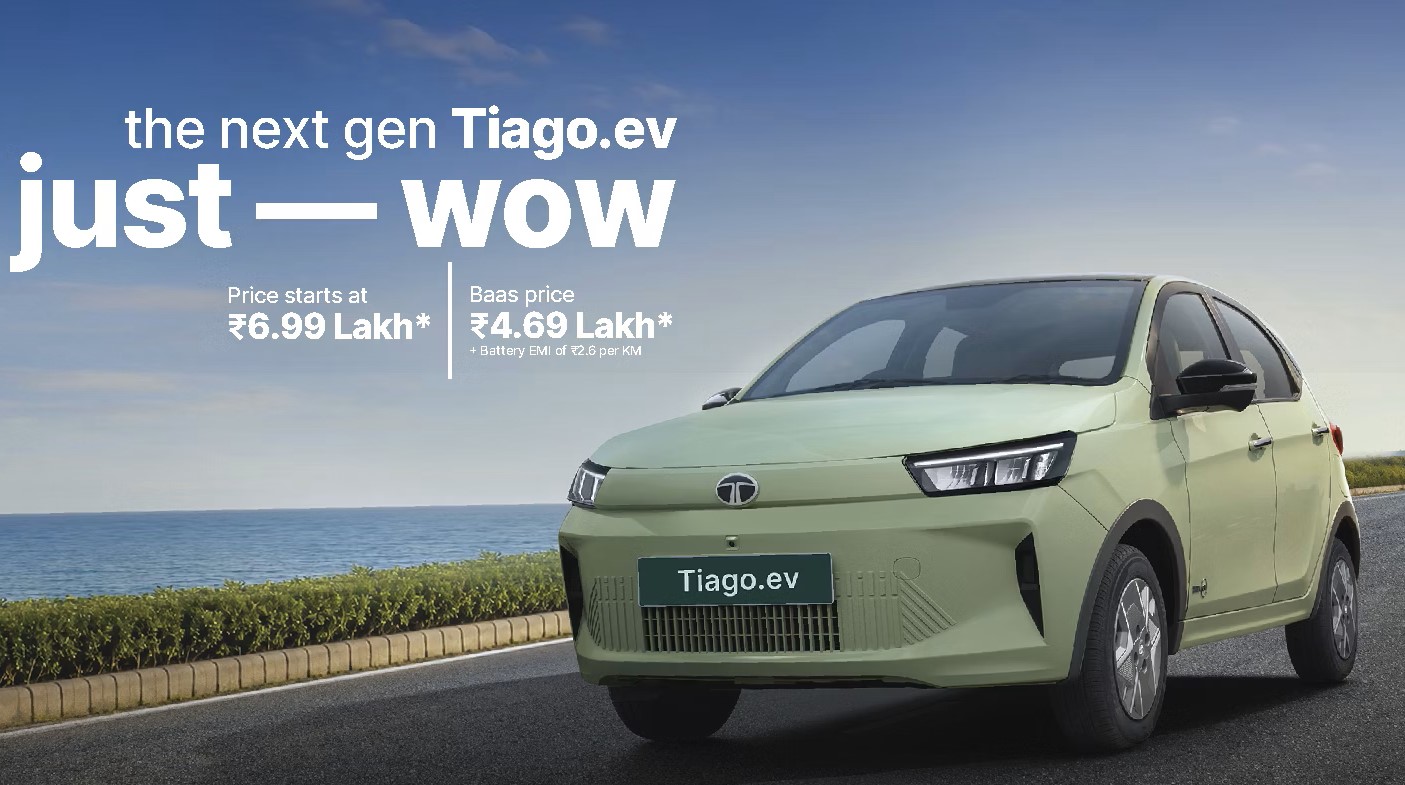
Tata Motors unveiled the new Tata Tiago EV Facelift in the Indian market only a few days ago on May 28th. Soon after its launch, we have detailed this electric hatchback on our blog, with all the design changes, features, batteries available and its pricing.
But, even the specifications and feature list of any vehicle can’t reveal all of its strong or weak attributes. It can only be seen when it is driven under normal conditions of use. Which is why we took over the driving of the Tata Tiago EV Facelift and put it to the test in real world scenarios.
In this article, I’m not just highlighting the practical benefits and drawbacks of the Tiago EV, but giving you a glimpse into my own driving experience so you can determine whether or not it is the right EV to consider, or if you should be looking elsewhere.
This is a new design with a modern style.

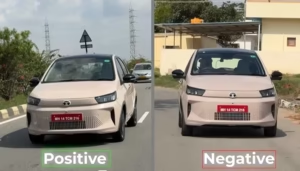
The refreshed Tata Tiago EV maintains its recognisable design at first sight but there are some subtle alterations to give it a contemporary and attractive appearance. The clean concept in front is now more EV friendly, with stylish LED lighting elements, and a more premium appearance. The exterior is enlarged but the styling is refreshed to make the hatchback look taller and stand out on the road.
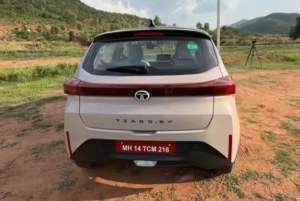
Minor enhancements to the rear design include a bumper clean-up and the connected look taillight treatment. Though a compact hatchback, the Tiago EV boasts a useful ground clearance of 170 mm as per compatible conditions of Indian roads.
Better battery tech and warranty as a bonus.
An exciting part of the newer Tiago EV is Tata’s battery management enhancements. No changes have been made to the battery packs, but Tata says it has improved with latest software integration and cell balancing technologies. This has enabled the company to provide an even more reassuring warranty package, providing greater appeal to potential first time EV buyers.
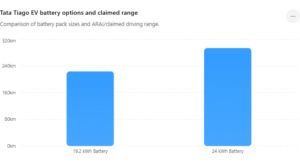
| Battery Pack | Power Output | Claimed Range* | DC Fast Charging |
|---|---|---|---|
| 19.2 kWh | 61 PS | 223 km | Up to 30 kW |
| 24 kWh | 75 PS | 293 km | Up to 30 kW |
The high-end on the inside is given In Tiago.ev
Steeping inside, you will see a major change in the interior.The interior of the cabin looks much more modern than originally. A better door lining, a new dashboard and a newly designed recliner seat add to the luxurious feel.
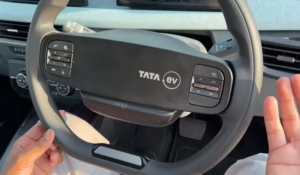
A new look is given to the steering wheel that is not only more pleasing to the eye, but resistant to fingerprints and scratches. For the real-world appeal, Tata has also introduced improved storage provisions, armrest console, as well as rear AC bladders that improve usability.
New 10.25-Inch Touchscreen and 360-Degree Camera.
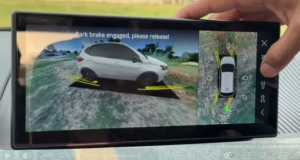
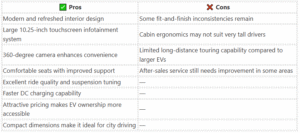
Technology is one aspect of advancement the Tiago EV has made huge strides in as well. The new 10.25-inch touchscreen infotainment system is responsive with intuitive controls that supports Android Auto as well as Apple CarPlay.
A truly unique bonus is the 360 degree camera system which is not typically found in this bracket. It provides better visibility while parking and driving in confined urban areas, making it even more convenient and safe.
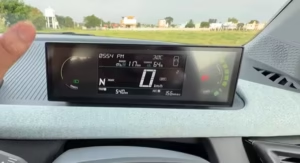
Further it is also adorned with a 5 inch (12.5 cm) new digital instrument panel which is packed with information, including battery state of charge, regeneration levels, energy consumption, and estimated range.
Faster Charging Than Before
We have utilised a 60kW charging station with a charging gun of maximum 30KW on the Tata Tiago EV for the charging test. The objective was to discover exactly how much real driving range can actually be gained over a time of 18 minutes, as advertised by Tata Motors.
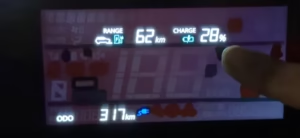
At the time of the test, the remaining battery is 28% with an estimated range of 62 km. The charging was then started and we waited and observed the additional range that could be obtained within the 18 minutes of charging time.
At the end of the charging session, the battery would be charged to 59%, with an increment of 31%. The charging station said it delivered 7.5 KWH and the ultimate charging cost was ₹246.
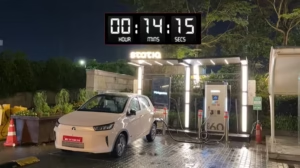
But when we checked the time of charging later, we noticed that the actual running time for the test had been for only 15 minutes, not the 18 minutes that we really had hoped for. The charging session began at 8:09 PM and finished at 8:24 PM for a total of 15 minutes, due to the inadequate balance at the charging station.
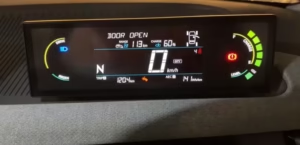
During 15 minutes of charging, the battery range scaled from 62 km to 113 km, which means that in this period of time the estimated range increased up to 51 km. According to this graph we can assume that the range could increase up to 61 km to 70 km, if we charge the Tiago Ev up to 18 minutes.
Tata Motors states that the Tiago EV can achieve a maximum range of up to 100 km under 18 minutes of fast charging when tested by the Indian Driving Challenge (IDC). The IDC in real world equates to a distance of about 70 km of driving range. The car in our test also achieved an estimated 61 km over the same time frame, more or less in line with the company’s promise, and proof of the improved fast charging system.
Comfortable and surprisingly fun driving experience.
Seats have been upgraded for better support and so are easier to drive in for longer journeys. The instant torque delivery delivers quick acceleration in the city and Sport mode lends further excitement as and when required.
One of the best features of the car is its ride quality. Suspension gets impressive mileage out of rough roads and the hatchback is stable even at high speeds. Steening response is implied and can be reliably predicted for by the driver, here ensuring they are confident to handle with ease in normal driving conditions.
Real-World Range of Tiago.ev
Next up, let’s discuss the range in the real world. During this test, we drove the Tata Tiago EV for around 120 km, where the battery capacity is consumed by approximately 70% during the drive. From these calculations one can infer that the practical range is approximately 171 km when fully charged.
Please keep in mind, however, that our test environment was not typical. As part of the evaluation process we drove the car aggressively at times, pushed the car to higher speeds, repeated some hard braking tests and pushed the car into hilly territory. During the trip we also tried various operating modes of the air-conditioning system. Of course all increase energy consumption and decrease the range.
The range at normal driving conditions on city roads and highways, when a typical driver drives the Tiago EV more smoothly while riding at more steady speeds, is likely to be a lot higher. Adopting a safe and economical driving style and temperature control usage and conditions, drivers can realistically expect to travel a distance of between approximately 190 to 210 km per full charge.
Pros & Cons Of Tiago.Ev
Will Tata Tiago EV be worth the hype?
Tata Tiago EV is a great choice for those who want a budget-friendly EV with minimal running costs. In this case, if the daily distance travelled is within 15-30 km and the budget is in the vicinity of ₹7 lakh, the base type can be enough which can be charged for a few days.
The 24 kWh battery option is more suitable for drivers who commute up to 50 km a day, and the typical range experienced in the field is approximately 200 km. If, on the other hand, you drive the vehicle more than 70–100 km a day regularly, then perhaps the Tata Punch EV is a better option, with a battery size of 30 kWh, offering about 250 kilometres of real world range, coupled with better performance as well as more space and the convenience of the micro-SUV.