Are you planning to buy a stylish SUV on a budget? Then wait a moment! Hyundai has introduced its all-new SUV, the Hyundai BAYON, on 26 October 2026. With its eye-catching design and a strong focus on safety, this SUV aims to attract buyers looking for a combination of style, comfort and practicality.
But what makes the Hyundai BAYON special? What does it offer in terms of design, features, performance and safety? And is it worth considering for your next car? Let’s explore everything you need to know about the new Hyundai BAYON.
Design Highlights: What Makes It Stand Out?
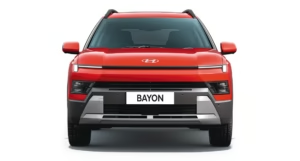
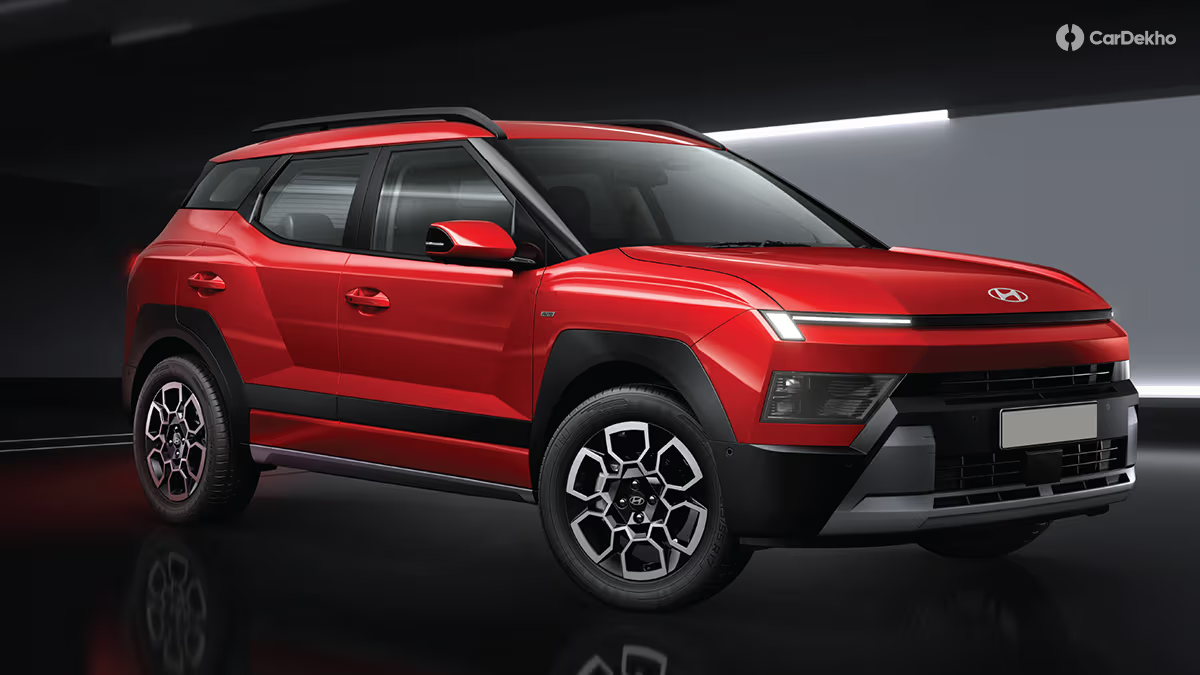
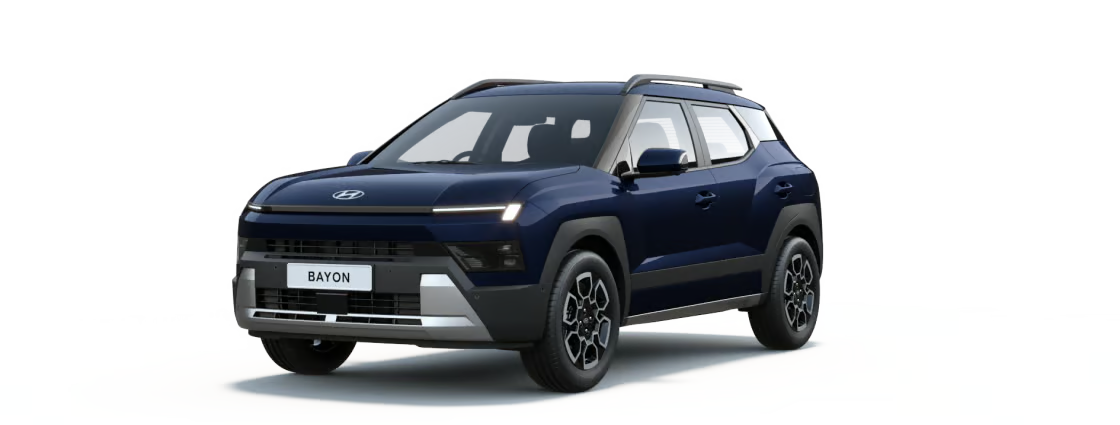
Lookwise, It features a bold and modern SUV design that combines sharp styling with distinctive lighting elements. At the front, the SUV features signature H-edge LED daytime running lights (DRLs), while the higher variants come with dual LED projector headlamps for a more premium appearance. The front LED turn indicators are also available on selected higher variants.
From the side, the Hyundai BAYON gets wrap-around door cladding, bridge-type roof rails and stylish wheel options. The lower variants come with 16-inch steel wheels with wheel covers, while the HX 3+ and HX 5 feature 17-inch styled steel wheels. The higher HX 6, HX 8 and HX 10 variants get 17-inch diamond-cut alloy wheels, which enhance the SUV’s sporty appearance. The roof rails further add to its SUV character.
At the rear, the Hyundai BAYON features signature H-edge LED tail lamps connected visually by a spread-type emblem. A sporty rear spoiler, LED high-mounted stop lamp and shark-fin antenna add to its modern styling. Rear LED turn indicators are available from the HX 5 variant onwards, while puddle lamps are offered on the HX 6, HX 8 and HX 10 variants.
Hyundai BAYON is available in six monotone colours, including Fiery Red, Atlas White, Ecotronic Grey, Golden Bronze, Titanium Black and Classy Blue. Buyers looking for a distinctive appearance can choose Titanium Black Matte or Classy Blue Matte. Dual-tone options include Fiery Red with a Titanium Black roof and Atlas White with a Titanium Black roof. However, colour availability and exterior features may vary depending on the selected variant.
Interior, Comfort and Convenience Features
When you steeping inside this you will find, BAYON offers a premium, technology-focused cabin with a dual-tone Black and Olive Grey theme or a sporty black interior with red highlights. Key design elements include a D-cut steering wheel, a cascade-flow centre console, a fabric-touch dashboard and ambient lighting. Higher variants feature premium leatherette seats and a panoramic sunroof.
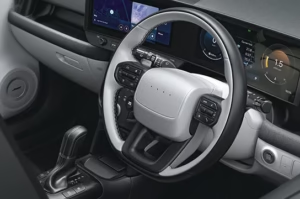
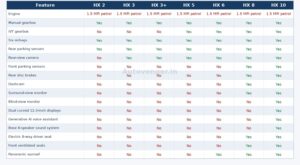
For comfort, the HX 8 and HX 10 variants offer an electrically adjustable 8-way driver seat, ventilated front seats, reclining rear seats, a 60:40 split rear seat and a rear centre armrest with cupholders. A sliding front armrest is available from HX 6. All listed variants get rear AC vents, tilt-and-telescopic steering adjustment, power windows, USB Type-C chargers and a power outlet. Automatic climate control and cruise control are available from HX 5, while a rear wiper and washer are offered on HX 6, HX 8 and HX 10. Electrically folding outside mirrors are also available from HX 5.
Infotainment and Connectivity Features
The Hyundai BAYON offers modern infotainment and connected technology, especially in its higher variants. HX 2 to HX 8 get a 10.66 cm digital instrument cluster, while the HX 10 features a larger 12.3-inch full-digital cluster. The HX 3 to HX 8 variants offer a 10.25-inch infotainment system, while the top-spec HX 10 gets a 12.3-inch connected navigation system alongside a separate 12.3-inch digital instrument display. It also features a generative AI voice assistant.
Other technology features include wireless Apple CarPlay, Android Auto, Bluetooth, voice recognition and steering-wheel controls. Wireless phone charging is available from HX 5, while the HX 10 gets a premium Bose 8-speaker sound system. The SUV also offers JioSaavn music streaming, nature-inspired ambient sounds and Hyundai Bluelink connected-car technology. A smart key with push-button start is available from HX 3, and Hyundai states that the Bluelink subscription is free for three years.
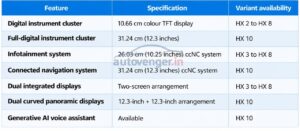
The AI voice assistant can be activated by saying “Hey Hyundai” to ask questions about nearby places, cricket scores and weather, or control selected cabin functions. Its technology involves Perplexity, SoundHound AI and NVIDIA. However, voice assistance is available in English only.
The car also supports C-OTA ON, allowing software updates over Wi-Fi or mobile networks. Updates can cover up to 19 vehicle controllers, including the digital cluster, climate control, safety systems and connected navigation, helping keep supported features up to date.
Structural Safety and Body Strength
The platform on which Hyundai BAYON is built on is a Global K enhanced platform designed with a strong focus on structural integrity and occupant protection. Its body structure incorporates hot-stamped steel, Ultra High Strength Steel (UHSS), Advanced High Strength Steel (AHSS) and High Strength Steel (HSS) to enhance strength and rigidity. Hyundai also highlights more than 35 standard safety features and over 80 advanced safety features, underlining the SUV’s focus on comprehensive protection.
Standard Safety Equipment Across All Variants
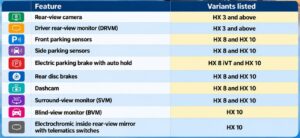
Safety equipment on the Hyundai BAYON includes six airbags as standard, covering the driver, front passenger, side and curtain areas. The SUV also comes equipped with Electronic Stability Control (ESC), Vehicle Stability Management (VSM), Anti-lock Braking System (ABS) with Electronic Brake-force Distribution (EBD), Hill-start Assist Control (HAC) and Emergency Stop Signal (ESS).
Additional features include rear parking sensors, a Highline Tyre Pressure Monitoring System (TPMS), front seat-belt pretensioners, seat-belt reminders for all seats, ISOFIX child-seat anchors and an immobiliser. The safety package is further supported by a burglar alarm, front disc brakes, central locking, impact-sensing door unlocking, speed-sensing door locking, a tailgate emergency lamp, a dual horn and a headlamp escort function.
Hyundai BAYON SmartSense Level 2 Pro ADAS Features
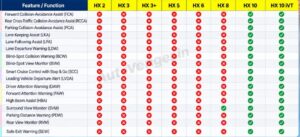
The Hyundai BAYON features SmartSense Level 2 Pro ADAS, offering driver assistance technologies designed to enhance safety and driving confidence. Key features include Forward Collision-Avoidance Assist, Lane Keeping Assist, Lane Following Assist, Blind-Spot Collision Warning, Rear Cross-Traffic Collision-Avoidance Assist, Driver Attention Warning, High Beam Assist and Smart Cruise Control with Stop & Go. Other features include a Blind-Spot View Monitor, Surround View Monitor, Safe Exit Warning and Parking Collision-Avoidance Assist. Feature availability may vary by variant.
Hyundai BAYON Engine Specifications: Power, Torque and Gearbox
The Hyundai BAYON is powered by a 1.5-litre MPi petrol engine with a displacement of 1,497 cc and a four-cylinder configuration. This engine produces a maximum power of 115 PS (84.4 kW) at 6,300 rpm and peak torque of 143.8 Nm at 4,500 rpm.
Transmission options include a 6-speed manual gearbox and an Intelligent Variable Transmission (iVT). Selected iVT variants also feature drive mode selection and paddle shifters for a more engaging driving experience. Additionally, Hyundai offers Dash Boost mode for overtaking and Sporty Drive Tech with the iVT, which focuses on sporty gear shifts and improved shift feedback.
Hyundai BAYON Mileage:
The Hyundai BAYON is powered by a 1.5-litre naturally aspirated petrol engine, available with a 6-speed manual and a CVT automatic transmission. It delivers a claimed mileage of 18.6 kmpl. However, actual fuel efficiency may vary depending on the transmission, traffic conditions, driving style and road conditions. Real-world mileage figures have not yet been confirmed.
Hyundai BAYON Price & Varients
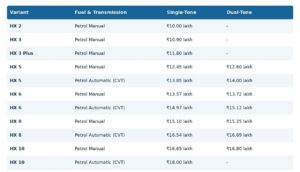
The Hyundai BAYON is priced from ₹10 lakh to ₹18 lakh (ex-showroom) in India, depending on the variant, transmission and colour option. The entry-level variants are suitable for budget-conscious buyers, while the top-spec HX10 offers more premium features and technology. Buyers should compare variant-wise features and on-road prices before making a final decision.
Varients Wise Feature List: