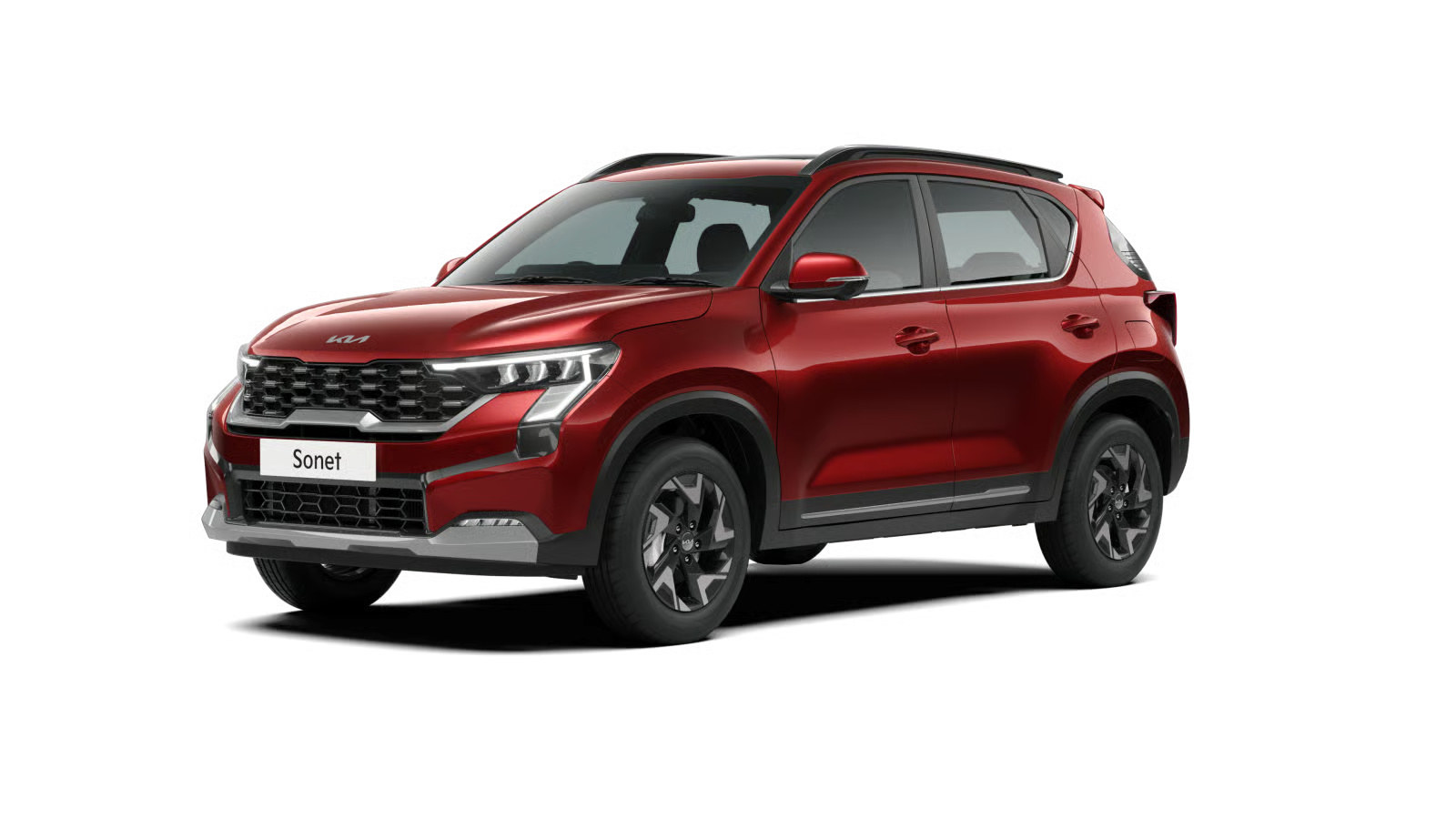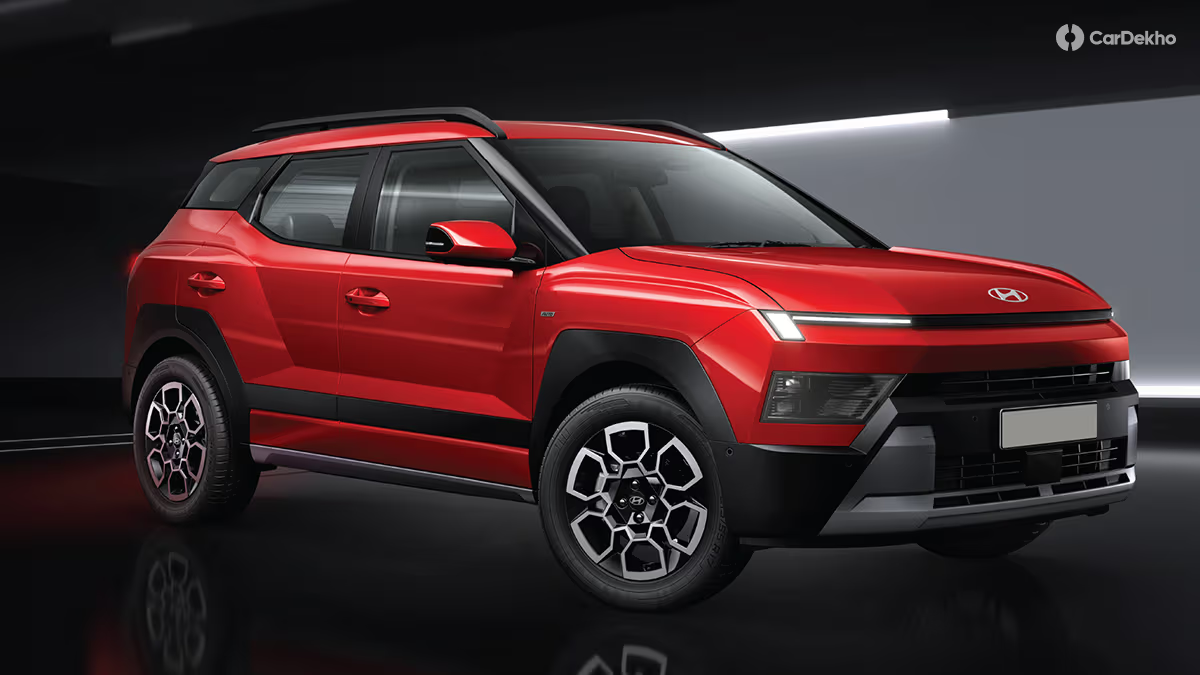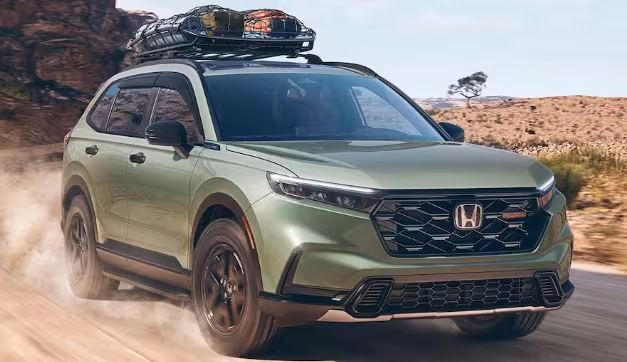
Honda is a popular car brand that manufactures several SUVs, including the Honda HR-V and the Honda CR-V, which are geared towards different buyers. The HR-V’s emphasis on affordability, fuel efficiency and everyday utility makes it a compact and city-friendly crossover, while the CR-V boasts a larger cabin, greater power, and a more upscale feel.
Both SUVs feature a 5-seater configuration, and the CR-V offers significantly more seating and cargo utility for families and longer trips. From design and interiors to engine performance and safety, this comparison reveals which Honda’s Suv’s is truly fits your lifestyle and budget in 2026.
Exterior Comparison : Honda HR-V v/s Honda CR-V
Front Design


The Honda HR-V has a clean and simple appearance at the front, featuring a narrow grille, prominent LED headlights and a coupe-like nose for a sporty urban aesthetic. The bottom-down appearance and simplicity of lines create a more dynamic and stylish look, particularly appealing to younger consumers.
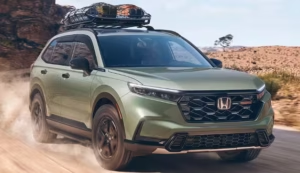
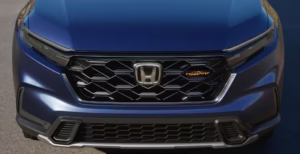
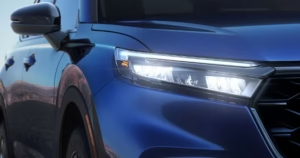
By contrast, the front fascia of the Honda CR-V is more forthright and assertive. It receives a bigger grille, wider air intakes and an SUV-like stance to improve on-road presence. The front looks more premium and muscular, making the CR-V feel more like a family SUV.
Side Profile
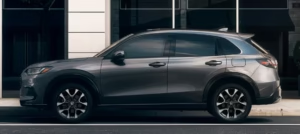
On the side, the HR-V exhibits a sleek profile with clean body lines and a sloped roofline to lend a sporty crossover appearance. The small size suggests it is agile and city-friendly, while the concealed rear door handles also provide a contemporary style.

Meanwhile, the CR-V features a longer, taller body style, with a focus on functionality and space. It has a more traditional SUV look with squared wheel arches and larger windows, along with a straighter roof line. It’s obvious that the CR-V appears larger, roomier and better-equipped for extended family road trips.
Rear Design
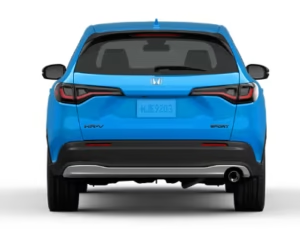
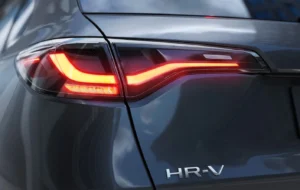
The Honda HR-V has a sleek and modern design at the rear, featuring sleek LED taillights with the clean tailgate layout. The bumper style and coupe-cut back glass make it have a sporty look, as compared to other vehicles.
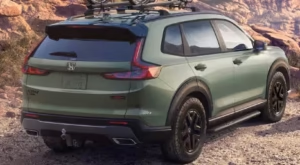
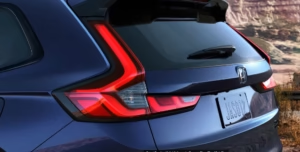
On the other hand, the Honda CR-V adopts a more robust and functional rear styling approach. It features vertically mounted LED taillights, a bigger tailgate and a bulkier rear bumper, making for easier visibility and usability. The rear of the CR-V appears more refined and substantial in keeping with its size as an SUV.
Overall Exterior Character
However, the Honda HR-V would be attractive to Honda buyers seeking a compact, stylish, and sporty crossover with excellent city driving, while the Honda CR-V would be ideal for those looking for a larger SUV that looks more premium and has strong road presence and family utility.
Dimensions
On measuring the dimensions, it features roughly 4,347 mm long, 1,790 mm wide and 1,590 mm high and has a wheelbase of about 2,610 mm. With a ground clearance of approximately 196 mm, the HR-V can easily handle speed bumps and rough roads for a comfortable ride and get around in cities.
Meanwhile, the Honda CR-V is bigger than the Honda HR-V. The dimensions are approximately 4,694 mm long, 1,864 mm wide, 1,681 mm high and approximately 2,700 mm wheelbase. With a ground clearance of approximately 208 mm, CR-V brings greater presence to the road and enhanced capabilities on uneven road surfaces.
Tyre Profile:
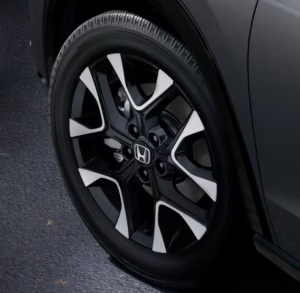
Generally, the Honda HR-V will use a 17- or 18-inch alloy wheel with a tyre size of 215/60 R17 or 225/50 R18, ensuring a balance of comfort, grip, and fuel efficiency.
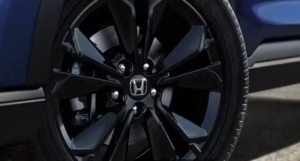
However, the Honda CR-V typically comes with more upscale 18-inch and 19-inch alloy wheels with a tyre size of 235/60R18 or 235/55R19, which offer enhanced grip on the road, handling, and SUV aesthetics.
Interior Comparison: Honda HR-V v/s Honda CR-V
HONDA HR-V

The Honda HR-V’s interior is clean and modern, primarily geared towards urban utility and comfort. The interior is designed with a premium feel thanks to the honeycomb pattern of air vents and the compact layout of the dashboard, which is horizontal.
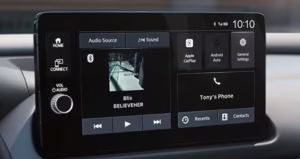
Technologically, the Honda HR-V usually gets an infotainment system with a 7-9 inch touchscreen, depending on the market and variant. It is equipped with Apple CarPlay and Android Auto connectivity, Bluetooth, USB ports and steering controls.
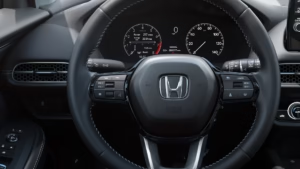
Meanwhile, a 7-inch TFT instrument cluster, wireless smartphone connectivity, automatic climate control, wireless charging, push-button start, rear AC vents, smart rain-sensing wipers, ambient lighting and single-pane electric sunroof make for a more premium, airy cabin.
The boot space is 24.4 cu. ft at the rear, which can be increased to 55.1 cu. ft when the rear seats are folded for daily or weekend trips.
Honda CR-V

The Honda CR-V’s cabin is more upscale and spacious than the HR-V’s. The dashboard design feels wider and more luxurious, featuring soft-touch materials, improved insulation, and a more sophisticated overall finish.
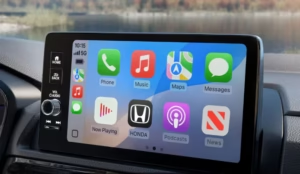
On the tech front, the CR-V features a 9-inch touchscreen infotainment system in the more modern versions. Additional upgrades of the higher trims include a larger digital driver display, wireless Apple CarPlay and Android Auto, navigation, premium audio systems and multiple USB charging points.
In terms of comfort, the CR-V offers a 10-inch digital instrument cluster, dual-zone automatic climate control, power-adjustable front seats, heated seats and steering wheel (depending on the market), wireless charging, premium leather upholstery, a Bose sound system and a moonroof or a larger electric sunroof in higher trims, which makes the cabin feel significantly more airy and premium.
Along with this, the boot space is 39.3 cubic feet at the rear, which can be increased to 76.5 cubic feet. When the rear seats are folded for daily or weekend trips.
Safety Features: Honda HR-V v/s Honda CR-V
The Honda HR-V and Honda CR-V feature cutting-edge protection systems, providing enhanced driver confidence and passenger security. All models come with adaptive cruise control, lane-keeping assist, collision mitigation braking, blind-spot monitoring, parking sensors, several airbags, electronic stability control and a rearview camera.
Both the SUVs also have the possibility of a number of resources, such as traffic jam assist, cross traffic alert and advanced driver monitoring systems, which is to be expected on higher trims.
Engine & Performance Comparision : Honda HR-V v/s Honda CR-V
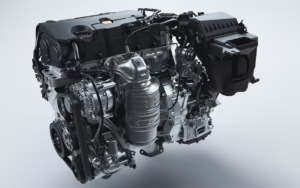
The Honda HR-V is powered by a 2.0L naturally aspirated 4-cylinder petrol engine mated with a CVT automatic transmission. This engine produces around 158 hp of power at 6,500 rpm and 187 Nm of torque at 4,200 rpm.
On the other hand, the Honda CR-V is powered by a 1.5-litre turbocharged 4-cylinder petrol engine, and a hybrid electric powertrain system enables the CR-V to deliver more performance. The turbo petrol engine delivers around 190 hp of power at 6,000 rpm and 243 Nm of torque at 1,700–5,000 rpm, mated with CVT transmission.
Mileage : Honda HR-V v/s Honda CR-V
The petrol versions of the Honda HR-V are estimated to travel approximately 14-16 km per litre of petrol. A smaller locomotive and lighter weight contribute to good fuel economy in cities. On the other hand, Honda CR-V’s turbo petrol variant is estimated to achieve from 13 to 15 km/l, and hybrid variants are estimated to achieve from 18 to 20 km/l, depending on the market and driving conditions.
Pricing Comparision : Honda HR-V v/s Honda CR-V
Depending on the variant, drivetrain and optional features, the Honda HR-V usually sells starting at $26,600 USD (for LX variants) and up to $30,450 USD (for EX-L variants).
On the other hand, the Honda CR-V is more expensive, and its prices begin at about $30,920 (for LX variants) and move to $42,550 (for sport touring hybrid variants), particularly for the higher trims and hybrids.
A/V Buying Guide:
For those seeking a compact, fuel-efficient and city-friendly SUV, the Honda HR-V is a better deal with its city-friendly handling and affordable price. But for those who require greater cargo capacity, enhanced performance, increased seating capacity, and a more stylish driving experience, the Honda CR-V proves to be the pragmatic, family-car-oriented SUV.