
The cost of petrol continues to rise, and there is an increasing need for cleaner and more economical means of transport, which makes CNG (Compressed Natural Gas) one of the most viable choices. Today, numerous car buyers are opting for the factory-fitted CNG cars or converting their petrol vehicles to CNG and cutting the running costs without sacrificing their daily habits. Ever wondered how a petrol engine can run on CNG without replacing the engine? So let’s learn how a CNG kit works with a petrol engine and what the role of each component is to provide a safe, efficient, and economical performance.
What Is CNG?
Compressed Natural Gas (CNG) is a clean-burning alternative fuel that is made mainly of methane (CH₄). It is obtained by compression of natural gas to a pressure of approximately 200-250 bar, which compresses the volume by almost 99% and enables safe storage in high-pressure cylinders mounted within vehicles. CNG is stored as a gas and burns much more cleanly than petrol and diesel, resulting in reduced emissions of carbon monoxide (CO), carbon dioxide (CO₂), nitrogen oxides (NOₓ), and particulate matter. This makes it an environmentally safe fuel choice, and it will also help minimize engine deposits and prolong engine life. With lower running costs, cleaner combustion, and its availability in many cities, it is one of the most popular fuel types for private cars, taxis, and commercial vehicles.
The main components and functions of a CNG system are:
1. CNG Cylinder
The main storage unit of the system is a CNG cylinder. It is used to store compressed natural gas at a very high pressure of 200-250 bars. The cylinder is made of high-strength steel or composite material and is designed to withstand high pressure and impact. It is generally placed in the boot of the vehicle and has extra safety valves to protect against overpressure and gas leakage.
2. Filling Valve
The filling valve is used to fill the cylinder with CNG. It is fitted with a non-return valve to avoid the flow of gas back out during or after fueling. Modern filling valves also feature filters that prevent dust and impurities from entering the CNG system.
3. High-Pressure Fuel Lines
CNG is transported from the cylinder to the engine compartment via high-pressure fuel lines. These pipes are made of steel or stainless steel, which have been specially reinforced for the safe transport of gas at very high pressure and are resistant to corrosion, vibration, and heat.
4. Pressure Regulator (Reducer)
One of the most important parts of a CNG system is the pressure regulator, also called a reducer. It decreases the pressure of the gas in the cylinder from 200–250 bar to a much lower pressure that can be used for combustion in the engine. It also ensures smooth and efficient operation of the engine while maintaining constant gas pressure even when the engine operates at different speeds and loads.
5. CNG Filter
The CNG filter is used for filtering the gas from dust, oil particles, and other impurities before supplying it to the injectors. Clean fuel prevents damage to the fuel injectors and keeps the regulator and engine operating smoothly with consistent performance and fuel efficiency.
6. CNG Injectors
CNG injectors accurately measure and inject the correct amount of natural gas into the air intake manifold. The ECU electronically controls them, and they open for merely a few milliseconds to inject the right quantity of fuel for various driving conditions.
7. Electronic Control Unit (ECU)
The ECU is the decision maker in the CNG system, often known as the brain of the CNG. It gets data from engine speed, throttle position, oxygen sensor, manifold pressure, and coolant temperature sensors. It uses these inputs to compute the right fuel amount, actuate the injectors, and automatically swap between petrol and CNG.
8. Fuel Selector Switch
The fuel selector switch, which is found on the dashboard, enables the driver to switch between petrol and CNG mode. It also shows the level of CNG in the cylinder by indicator lights or digital display. An automatic fuel selector switch is preinstalled in modern vehicles that are fitted with company-fitted CNG kits.
9. Solenoid Valves
Solenoid valves are electrically operated safety valves located in the vicinity of the cylinder and engine. If the engine is running on CNG, they open automatically and shut when the engine is turned off or a fault is detected, preventing unwanted gas flow.
10. Depending on the system type, mixer, or intake manifold.
In the older CNG systems, a mixer is used to mix CNG with the air coming into the engine. Today, most sequential CNG systems include gas injectors, which spray gas directly into the intake manifold, ensuring better fuel control, better performance, and lower emissions.
How All The CNG Components Work Together.
The operation of the CNG system starts when the vehicle is refueled by the CNG station. The compressed natural gas vehicle fuel system is filled at the vehicle’s main filling valve. The compressed natural gas is fed into the vehicle via the filling valve, which forms the first component in the fuel system. The filling valve contains a one-way (non-return) valve to ensure that gas is only filled into the cylinder and not discharged from the cylinder during and after filling. The gas is filtered before it goes into the cylinder to make sure only clean gas is kept in the cylinder.
Inside the vehicle, the CNG is stored at a high pressure, around 200–250 bar. The cylinder is made with high-strength steel or advanced composites and is able to resist high pressure up to a very high limit. It also features pressure relief devices and safety valves, which release gas automatically if pressure rises in the cylinders because of excessively high temperatures, thus avoiding damage or explosion of the cylinder.
The engine usually starts running on petrol, particularly on a cold start, when the driver turns on the vehicle. Petrol has a high vaporization point compared to CNG, and therefore the engine can warm up quickly and without any hassles. The Electronic Control Unit (ECU) continuously monitors the engine temperature, coolant temperature, engine speed (RPM), throttle position, and more. The ECU then automatically instructs the fuel system when the engine is operating at the specified temperature to switch from petrol to CNG, without stopping the engine.
When the switch turns on, the solenoid valve on the CNG cylinder is opened electronically, which allows high-pressure gas to enter the high-pressure fuel lines from the CNG cylinder. The reinforced steel pipes used are specially engineered to deliver a compressed gas from the cylinder mounted at the rear to the engine compartment, even in the most demanding operating environments and vibration.
The high-pressure gas is then passed to the pressure regulator, or reducer, as it is often called. One of the most important parts of the whole CNG system. Since the pressure of the stored gas cannot be directly fed to the engine, the regulator is used to step down the pressure of the gas stored at 200–250 bar to the safe operating pressure of only a few bars.
The gas is then passed through the CNG filter, which filters out the small particles, moisture, and oil residue from the gas. The fuel needs to be clean because the fuel injectors can clog or the fuel regulator can malfunction, which will impact performance and fuel economy.
After that, the filtered gas goes to the CNG injectors. These injectors operate in a similar manner to petrol injectors but are specially made to work with gaseous fuel. The ECU calculates the precise amount of CNG to be used, based on data from the various sensors, including the oxygen sensor, throttle position sensor, manifold absolute pressure (MAP) sensor, engine RPM sensor, and coolant temperature sensor. From these inputs, the ECU controls the amount of electrical signals sent to the injectors, which allows it to open the injectors for a very small period of time, typically a few milliseconds. This can help ensure that the right amount of CNG is injected in the cylinders at every stage of the driving.
The injected CNG mixes with fresh air inside the intake manifold before entering the combustion chamber. During the intake stroke, the piston moves downward, drawing the air-fuel mixture into the cylinder. As the piston rises during the compression stroke, the mixture is compressed to a high pressure. Because CNG has a very high octane rating of around 120–130, it resists premature ignition and knocking, resulting in smooth and controlled combustion.
At the end of the compression stroke, the electric spark produced by the spark plug is used to ignite the mixture of compressed air and CNG. High-pressure gases are generated by the combustion, which pushes the piston down during the power stroke. This rotation is used to move the crankshaft, and the generated power is transferred through the transmission to the wheels of the vehicle. However, the fuel is changed from petrol to CNG, but the operating cycle (intake, compression, power, and exhaust) in the engine remains the same.
During engine operation, the ECU is constantly monitoring the combustion process based on the information supplied by the oxygen sensor in the exhaust system. If the air-fuel mixture becomes too rich or too lean, the ECU automatically controls the timing and amount of fuel injected to keep the air-fuel mixture at the optimum ratio. This closed-loop control enhances fuel economy, helps lower emissions, and allows for better engine operation in varying conditions.
During driving, when the CNG pressure drops, the pressure sensor detects it and immediately informs the ECU. The ECU automatically shuts CNG solenoid valves, turns on the petrol injectors, and returns the engine to petrol without stopping the vehicle. Similarly, the driver can switch between petrol and CNG at any time with a fuel selector switch fitted to the car’s dashboard.
The whole system is safety-oriented. Once the engine is turned off, the ignition is cut off, or the ECU senses a problem like a gas leak or an abnormal pressure, the solenoid valves immediately close to prevent gas from flowing into the cylinder. Modern CNG vehicles are very safe due to the combination of pressure relief valves, leakproof connections, reinforced fuel lines, and electronic monitoring.
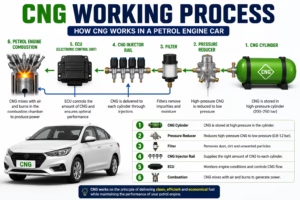
To conclude, all parts of the CNG system operate flawlessly. The filling valve keeps the fuel secure, the cylinder pressurizes the fuel, the solenoid valves regulate the flow, the high-pressure lines carry the gas, the pressure regulator lowers the pressure in the lines, the fuel filter purifies the fuel, the ECU determines the gas requirements, the injectors precisely inject the gas, and the spark plug ignites the air-fuel mixture to produce power. This simultaneous operation enables a petrol engine to efficiently utilize CNG and achieve reduced fuel costs, lower emissions, and reliable performance.
The Good Sides Of CNG in Petrol Cars:
Some of the practical and economic advantages of CNG use in a petrol car are summarized below. The most significant benefit is its cost-saving aspect because CNG is very economical in comparison to petrol and is ideal for those who travel a lot daily. Additionally, CNG combustion results in reduced emissions of carbon dioxide (CO₂), carbon monoxide (CO), hydrocarbons (HC), and nitrogen oxides (NO₂), thereby minimizing environmental pollution. The dual fuel facility is another huge advantage, enabling drivers to seamlessly switch between petrol and CNG, ensuring seamless travel even when CNG is unavailable.
The Bad Sides Of CNG In Petrol Cars:
Although CNG has its advantages, it has some disadvantages. It is less energetic than petrol and thus has a slightly lower power output and acceleration. A CNG cylinder takes up space in the boot, compromising capacity. Availability of refueling stations may be restricted in some areas with fewer CNG stations, and system maintenance and inspection should be done periodically for safe and efficient operation.
Best Aftermarket CNG Kits for Petrol Cars
For modern BS6 and OBD-2 petrol cars, sequential CNG kits are the best choice because they offer better fuel efficiency, smoother performance, and ECU compatibility than conventional kits.
1. Lovato (Italy) – Best Overall
- Excellent reliability and performance
- Smooth engine operation with minimal power loss
- Ideal for BS6/OBD-2 petrol cars
- Approx. price: ₹45,000–₹60,000 (installed)
2. BRC Gas Equipment (Italy)
- Premium build quality
- Excellent fuel economy and durability
- Widely trusted for long-term use
- Best for premium hatchbacks and SUVs
3. Tomasetto Achille (Italy)
- High-quality reducer and injectors
- Good balance of performance and mileage
- Reliable for daily driving
- Popular aftermarket choice
4. Landi Renzo (Italy)
- OEM-grade technology
- Smooth performance with advanced ECU control
- Suitable for modern petrol engines
5. Mijo Auto Gas (India)
- Designed for BS6 vehicles
- Good value for money
- ICAT-approved options available
- Lower maintenance cost than many imported brands
Buying Tip: Always choose an ICAT-approved sequential CNG kit and have it installed only by an authorized installer. Proper installation and ECU calibration are more important than the brand itself for safety, mileage, and engine reliability.
Points to Remember After Installing a CNG Kit
- Use petrol during cold starts if recommended by the kit manufacturer.
- Get the CNG kit serviced regularly, including filter replacement and ECU calibration.
- Check for gas leaks during scheduled maintenance and never ignore the smell of gas.
- Inspect the CNG cylinder periodically and follow the mandatory hydrostatic testing schedule prescribed by local regulations.
- Avoid overloading the boot, as the CNG cylinder occupies space and should not be subjected to excessive weight.
- Use only authorized CNG stations to ensure clean, high-quality fuel.
- Maintain sufficient petrol in the fuel tank, as the engine may start or switch to petrol when required.
- Replace spark plugs and air filters on time to maintain smooth performance and fuel efficiency.
- Never modify or tamper with the CNG system unless it is done by an authorized technician.
- Follow the manufacturer’s maintenance schedule to ensure safety, reliability, and long engine life.
Final Verdict
CNG is a great choice for petrol vehicles, particularly for the ones who drive a lot and would like to save on running expenses without sacrificing reliability. The performance loss and the loss of boot space for the CNG cylinder are minimal, but the cost savings from the alternative fuel, reduction in emissions, and dual-fuel flexibility are far greater. A factory-fitted CNG car or an ICAT-approved sequential aftermarket kit fitted by an authorized dealer provides optimum performance, safety, and reliability. For the majority of city commuters and regular drivers on the highways, CNG is still one of the most convenient and cost-effective solutions to petrol.


